

This program is not active.
Digital Seminar
Purchase Additional Participant CE »
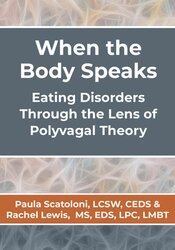
When the Body Speaks: Eating Disorders Through the Lens of Polyvagal Theory
- Average Rating:
- Not yet rated
- Faculty:
- Paula Scatoloni, LCSW, SEP | Rachel Lewis, MS, EDS, LPC, LMBT
- Duration:
- 59 Minutes
- Format:
- Audio and Video
- Copyright:
-
Nov 05, 2021
- Product Code:
- POS058707
- Media Type:
- Digital Seminar
Description
Eating disorders are complex, multi-layered and pernicious. And yet, even the best evidenced-based interventions currently available have limited long-term outcomes. Ironically, the body, the very stage where the war is waged, may be the missing link to effective treatment for eating disorders. Embodied Recovery is a new model of treatment designed to bring the body itself to the forefront of the treatment process. Grounded in the science of Polyvagal Theory, the ERED model addresses the role of neurobiological organization, the subjective experience of self, and our basic human needs for attachment and defense on our capacity to eat and digest effectively.
Credit
Handouts
| File type | File name | Number of pages | |
|---|---|---|---|
| Manual - When the Body Speaks (2.1 MB) | 25 Pages | Available after Purchase | |
| Text Document | Transcript - When the Body Speaks (40.1 KB) | 26 Pages | Available after Purchase |
Faculty

Paula Scatoloni, LCSW, SEP Related seminars and products
Paula Scatoloni, LCSW, SEP, has over 30 years of experience as a licensed clinical social worker specializing in attachment, trauma, and holistic care. Her complimentary approach integrates her training in attachment, the physiology of stress, mindfulness, energy psychology, and movement.
Paula has taught and lead clinical teams at institutions such as Duke University. Paula is the co-developer of The Embodied Recovery Institute and is featured in publications such as Trauma-Informed Approaches for Eating Disorders and the upcoming publication, Safe and Sound. She is the lead author of the Somatic Experiencing-Safe and Sound Guidelines and is a Certified Clinical Mentor for Unyte-ILS.
Speaker Disclosures:
Financial: Paula Scatoloni maintains a private practice and is the co-founder of Embodied Recovery Institute. She is a consultant and clinical advisor with Unyte-ILS and has an employment relationship with Leven Institute. Paula Scataloni receives a speaking honorarium from PESI, Inc.
Non-financial: Paula Scatoloni has no relevant non-financial relationships.
Rachel Lewis, MS, EDS, LPC, LMBT Related seminars and products
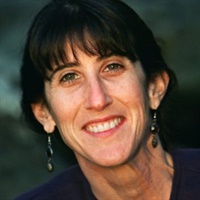
Rachel Lewis, MS, EDS, LPC, LMBT, Co-founder of Embodied Recovery Institute, Lead Faculty of Embodied Recovery for Eating Disorders.
Rachel is a somatically integrative psychotherapist, dually licensed in counseling and therapeutic massage and bodywork. She is a Certified Advanced Practitioner in Sensorimotor Psychotherapy and has advanced training and 25 + years of experience in diverse somatic therapies including Craniosacral Therapy, Energetic Osteopathy, Oncology massage and Aromatherapy.
Rachel began her work with eating disorders in Residential, PHP and IOP treatment programs. There she developed the Embodying Recovery group therapy protocol, which forms the basis for the EMBODIED RECOVERY for EATING DISORDERS (ERED) paradigm. She provided program development, training and supervision for the implementation of the ERED model to enhance the effectiveness of current best practices, such as DBT, Interpersonal Process, ACT groups. She also developed the Body Wisdom group protocol, an alternative to the traditional body-image group, which focuses on enhancing the mind-body relationship through mindful experience of and through the body.
She has extensive experience as a teacher and presenter, focusing on accessing the body’s unique capacity to give voice to the subconscious and to lay the foundation for healing and maintaining psychological and physical health. In her practice in Chapel Hill, NC, Rachel specializes in working with people exploring recovery from trauma, eating disorders, and dissociative disorders.
Speaker Disclosures:
Financial: Rachel Lewis-Marlow is the co-founder of the Embodied Recovery Institute and she maintains a private practice. She has no relevant financial relationships with ineligible organizations.
Non-financial: Rachel Lewis-Marlow is a member of the American Counseling Association, the International Association of Eating Disorders Professionals, and the Sensorimotor Psychotherapy Institute Alumni Organization.
Additional Info
Access for Self-Study (Non-Interactive)Access never expires for this product.
Questions?
Visit our FAQ page at www.pesi.com/faq or contact us at www.pesi.com/info
Objectives
- Propose how the systems of attachment, defense, and sensory processing are connected to our capacity to eat and digest effectively through the lens of Polyvagal Theory and correlated models the human behavior.
- Demonstrate how Polyvagal Theory is applied to the four principles of the ERED model.
- Apply two body-based, Polyvagal-informed, interventions that support regulation of affect, cognition, and digestion when working with eating disorders.
Outline
- Treating Eating Disorders: Current Approaches, Why We Need a Body-Based, Polyvagal-Informed Lens.
- The application of Polyvagal Theory into the 4 Elements of Embodied Recovery for Eating Disorders.
- Treating eating disorders from the bottom-up: review two body-based interventions that are Polyvagal-informed, including the integration of Safe and Sound Protocol as evidenced through a case summary.
Target Audience
- Addiction Counselors
- Counselors
- Marriage and Family Therapists
- Psychologists
- Social Workers
- Other Mental Health Professionals
Reviews
Satisfaction Guarantee
Your satisfaction is our goal and our guarantee. Concerns should be addressed to: PO Box 1000, Eau Claire, WI 54702-1000 or call 1-800-844-8260.
ADA Needs
We would be happy to accommodate your ADA needs; please call our Customer Service Department for more information at 1-800-844-8260.
Please wait ...