

Digital Version Available
Get immediate lifetime access to this content by purchasing the digital seminar/online course instead that you can access using a variety of devices, and one CE certificate is included with purchase! Click the “Digital Seminar” or "Online Course" link below to learn more!
DVD Purchasers please note: In order to view the content, you will be required to have a DVD player or a DVD drive on your computer. Your CE is a separate fee.
DVD
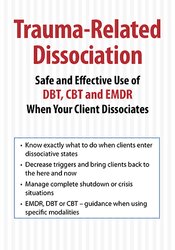
Trauma-Related Dissociation: Safe and Effective Use of DBT, CBT and EMDR When Your Client Dissociates
- Average Rating:
- Not yet rated
- Faculty:
- Katelyn Baxter-Musser, LCSW, C-DBT
- Duration:
- 6 Hours 21 Minutes
- Copyright:
-
Jun 21, 2022
- Publisher:
- PESI Inc.
- Product Code:
- RNV058777
- Media Type:
- DVD - Also available: Digital Seminar

Description
“There was nothing alarming in our session…then her posture collapsed and she didn’t say anything.”
Do I intervene? Should I just wait for the episode to pass?
Dissociation can be one of the most unnerving elements of trauma treatment. It can be as subtle as a client staring into space or as alarming as them slumping into their chair and becoming unresponsive.
But whether it’s extreme or just being “checked out,” dissociation can be a major roadblock to successful therapy. And if you don’t know how to identify and work with it, your clients could fail to respond to treatment.
This one-day seminar will provide you with the skills, knowledge and clinical interventions you need to identify and appropriately respond to dissociative states in your clients, from understated to unsettling.
When you purchase you’ll get a comprehensive training so you can safely and confidently:
- Re-engage clients when they “check-out” during therapy
- Manage complete shutdown situations and unnerving dissociative states
- Decrease triggers and bring clients back to the here and now
- Handle crisis situations
- Appropriately respond to dissociation when using DBT, CBT or EMDR
Don’t wait to add these must have strategies to your trauma treatment toolbox.
Purchase today!
Note: This product is not affiliated with the IFS Institute and does not qualify toward IFS Institute credits or IFS Institute certification.
Credit
Handouts
| File type | File name | Number of pages | |
|---|---|---|---|
| Manual - Trauma-Related Dissociation (13.2 MB) | 104 Pages | Available after Purchase | |
| CE Test - 058777 - Paper Option (256.6 KB) | 11 Pages | Available after Purchase |
Faculty

Katelyn Baxter-Musser, LCSW, C-DBT Related seminars and products
Katelyn Baxter-Musser, LCSW, CDBT, is a Licensed Clinical Social Worker in private practice in Maine where her areas of expertise include trauma, PTSD, abuse, domestic violence, depression, anxiety, grief and relationship issues.
In over 10 years of clinical experience, Ms. Baxter-Musser has successfully worked with dissociating clients across the spectrum of severity with techniques that ground them, bring them back to the body, and re-engage them in therapy. She formerly served as the trauma healing services clinical coordinator for La Frontera Arizona, a non-profit organization dedicated to providing behavioral health counseling, crisis intervention and support to families and individuals facing domestic violence, abuse, hate crimes and other issues.
Ms. Baxter-Musser is trained in Dialectical Behavioral Therapy, Cognitive Behavioral Therapy and is a Certified EMDR therapist. She is a member of the National Association of Social Workers, the American Academy of Experts in Traumatic Stress, the National Center for Crisis Management and the Maine Collaborative Law Alliance. She sits on the EMDRIA Standards and Training Committee and is the regional coordinator for the EMDRIA Southern Maine Regional Network.
Speaker Disclosures:
Financial: Katelyn Baxter-Musser, LCSW, CDBT, CPD, is the Owner, Operator and Trainer at Inner Awakening Counseling & Consulting and receives a speaking honorarium from PESI, Inc. She has no relevant financial relationships with ineligible organizations.
Non-Financial: Katelyn Baxter-Musser, LCSW, CDBT, CPD, is a member of the EMDRIA Standards and Training Committee, the Southern Maine EMDR Collation, the National Association of Social Workers, the American Academy of Experts in Traumatic Stress, and the National Center for Crisis Management.
Additional Info
Access for Self-Study (Non-Interactive)Access never expires for this product.
For a more detailed outline that includes times or durations of time, if needed, please email cepesi@pesi.com
Questions?
Visit our FAQ page at www.pesi.com/faq or contact us at www.pesi.com/info
Please Note
This product is not endorsed by, sponsored by, or affiliated with the IFS Institute and does not qualify for IFS Institute credits or certification.
Objectives
- Assess trauma survivors for signs of dissociation with the Dissociative Experiences Scale.
- Use psychoeducation to teach clients how to recognize signs of dissociation in themselves.
- Develop treatment plans that include grounding and containment skills so clients can orient themselves to the present when they notice they are dissociating.
- Integrate distress tolerance skills from DBT into treatment to decrease triggers and manage dissociative symptoms.
- Use CBT techniques to break down destructive beliefs that can lead clients to distressing emotions and trigger dissociation.
- Evaluate if and when EMDR should be used with clients experiencing dissociative symptomology.
Outline
Types of Dissociation, Risk Factors and Symptomology- The function of dissociation
- The role of early traumatic stress and insecure attachment
- The neurobiology of trauma and dissociation
- What dissociation looks like in therapy
- What to expect - how working with dissociated clients is different
- A review of current research, risks and treatment limitations
- How to recognize subtle signs of dissociation in trauma survivors
- Dissociative Experiences Scale
- Adult Attachment Interview
- Adverse Childhood Experiences Questionnaire
A Phase Oriented Approach to Establish Safety, Increase Stabilization and Reduce Symptoms
- Establishing safety
- Teaching clients to recognize dissociation
- Implementing effective grounding and containment skills
- Bring dissociating clients back to the body with mindfulness and relaxation techniques
- Simple ways to re-engage clients when they “check-out” during therapy
- How therapists can prevent colluding with avoidance
- Maximize attunement and build trust - exercises that get clients to open up
- Handling crises and risk management
- Culturally sensitive trauma work
Using Evidence-Based Treatments with Dissociating Clients:
Managing Dissociation When Using CBT, DBT and EMDR
CBT
- Identifying, recognizing and challenging negative core beliefs that triggers dissociative reactions
- Techniques to recognize and shift negative thoughts about the world
- Breaking down destructive beliefs that lead to distressing emotions and trigger dissociation
Dialectical Behavior Therapy
- Distress tolerance skills to decrease triggers and bring clients back to the here and now
- Self-sooth to IMPROVE the moment
- Paced Breathing
- Emotion Regulation skills to increase emotional awareness and change unwanted emotions
- Developing skills to regulate vulnerable emotions
Eye Movement Desensitization and Reprocessing
- Should I use “EMDR with dissociating clients?”
- Advanced training required
- Grounding and calm place techniques
Vicarious Trauma and the Clinician
- Recognizing the signs and symptoms of vicarious trauma
- Managing clinician self-doubt and shame
- Clinician self-care
- Maintaining healthy therapeutic boundaries
- Clinicians getting support
Target Audience
- Counselors
- Social Workers
- Marriage and Family Therapists
- Psychiatrists
- Psychologists
- Psychotherapists
- Addiction Counselors
- Nurses
Reviews
Satisfaction Guarantee
Your satisfaction is our goal and our guarantee. Concerns should be addressed to: PO Box 1000, Eau Claire, WI 54702-1000 or call 1-800-844-8260.
ADA Needs
We would be happy to accommodate your ADA needs; please call our Customer Service Department for more information at 1-800-844-8260.
Please wait ...