

Digital Version Available
Get immediate lifetime access to this content by purchasing the digital seminar/online course instead that you can access using a variety of devices, and one CE certificate is included with purchase! Click the “Digital Seminar” or "Online Course" link below to learn more!
DVD Purchasers please note: In order to view the content, you will be required to have a DVD player or a DVD drive on your computer. Your CE is a separate fee.
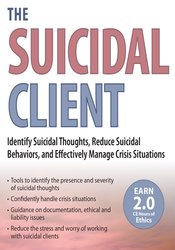
DVD
The Suicidal Client: Identify Suicidal Thoughts, Reduce Suicidal Behaviors, and Effectively Manage Crisis Situations
- Average Rating:
- 1
- Faculty:
- Glenn Sullivan, Ph.D.
- Duration:
- 5 Hours 28 Minutes
- Copyright:
-
Aug 14, 2019
- Publisher:
- PESI Inc.
- Product Code:
- RNV054560
- Media Type:
- DVD - Also available: Digital Seminar

Description
Your work with clients can save lives.
But working with suicidality is a source of extraordinary stress. Being a part of life or death decisions comes with uncertainty, second-guessing, and fears about competence, effectiveness, and responsibility.
Watch this course recording and learn how you can confidently work with suicidal clients with the tools and skills you need to assess for the presence and severity of suicidal thoughts, reduce high-risk and suicidal behaviors, and effectively intervene in crisis situations.
This recording will provide you with:
- Identifiers of indirect and behavioral signs of suicidality
- Techniques for determining level of risk
- Interventions for reducing high-risk and suicidal behavior
- A roadmap for intervening in crisis situations
- Guidance on documentation, ethics, and liability issues
Discover how you can transform the weight and worry of working with suicidality into the peace of mind of knowing you have what it takes to effectively help clients in their darkest hours.
Credit
Handouts
| File type | File name | Number of pages | |
|---|---|---|---|
| Manual - The Suicidal Client (3.37 MB) | 103 Pages | Available after Purchase | |
| CE Test – 054560 – Paper Option (257.2 KB) | Available after Purchase |
Faculty
Glenn Sullivan, Ph.D. Related seminars and products
Glenn Sullivan, Ph.D., is the co-author of The Suicidal Patient: Clinical and Legal Standards of Care (3rd ed.), published by the American Psychological Association, and co-editor of the Handbook of Military and Veteran Suicide, published by Oxford University Press. Dr. Sullivan earned his Ph.D. in clinical psychology at the Pacific Graduate School of Psychology, Palo Alto, California. He completed his clinical pre-doctoral internship at the San Francisco Veterans Affairs Medical Center, and a postdoctoral residency in post-deployment mental health at the Veterans Affairs Medical Center in Salem, Virginia.
Dr. Sullivan is a tenured professor of psychology at the Virginia Military Institute, where he is known for his dynamic and engaging teaching style. He is the recipient of VMI’s Thomas Jefferson Teaching Award, which is presented to a faculty member “deemed especially talented at inspiring students in the development of their intellect and character.”
In addition to his numerous publications and presentations on suicide, Dr. Sullivan maintains an active private practice in Lexington, Virginia. His clinical specializations include psychological assessment, forensic evaluation, and the treatment of combat veterans.
Speaker Disclosure:
Financial: Glenn Sullivan maintains a private practice. He receives a speaking honorarium from PESI, Inc. Glenn has no relevant financial relationships with ineligible organizations.
Non-financial: Glenn Sullivan has no relevant non-financial relationship to disclose.
Additional Info
Access for Self-Study (Non-Interactive)Access never expires for this product.
Objectives
- Assess for the warning signs of an imminent suicide attempt.
- Characterize the role of empathetic listening skills in the therapeutic relationship with suicidal clients.
- Determine how clinicians can manage countertransference with high-risk clients.
- Establish how evidence-based interventions can be employed to reduce suicide risk and improve functioning.
- Distinguish between ethical and unethical clinical practices with suicidal slients.
- Communicate the steps clinicians can take to develop a positive, confident perspective in their work with high-risk populations.
Outline
Risk Factors and Populations- Suicide risk and DSM-5® diagnosis
- Are your clients at risk for suicide?
- Military suicides and other populations
- Micro-suicidal behavior and self-hatred
- Develop your empathic listening skills
- Indirect statements and behavioral signs
- What can the test tell us? (and what they can’t)
- The Beck Scales
- MMPI-2
- Rorschach
- Firearms and “suicide accelerants”
- Determine level of risk
- Suicide at the Golden Gate Bridge: Lessons learned
- Modifiable risk factors for suicide
- Effective techniques to intervene in high risk behavior
- How psychiatric medication impacts risky behavior
- How to manage countertransference
- How major theories of suicide inform treatment choices
- Lethal-means restriction plans that work
- Evidence-based interventions from CBT and DBT
- Emotional regulation exercises
- Cognitive restructuring techniques
- Building distress tolerance
- Intervention as a collaborative effort
- A roadmap for handling suicidal crises
- Involuntary hospitalization: When, why, how
- Ethical and liability issues when involving family and others
- When and how to seek legal consultation
- Effective documentation strategies
- Physician-assisted dying and other ethical dilemmas
- How clinicians heal after suicide
Target Audience
- Social Workers
- Psychologists
- Counselors
- Marriage and Family Therapists
- Case Managers
- Addiction Counselors
- Therapists
- School-Based Counselors
- School-Based Psychologists Teachers
- School Administrators
- Nurses
- Other Mental Health Professionals
Reviews
| 5 |
|
| 4 |
|
| 3 |
|
| 2 |
|
| 1 |
|
Overall: 5
Total Reviews: 1
Satisfaction Guarantee
Your satisfaction is our goal and our guarantee. Concerns should be addressed to: PO Box 1000, Eau Claire, WI 54702-1000 or call 1-800-844-8260.
ADA Needs
We would be happy to accommodate your ADA needs; please call our Customer Service Department for more information at 1-800-844-8260.
Please wait ...