

Digital Version Available
Get immediate lifetime access to this content by purchasing the digital seminar/online course instead that you can access using a variety of devices, and one CE certificate is included with purchase! Click the “Digital Seminar” or "Online Course" link below to learn more!
DVD Purchasers please note: In order to view the content, you will be required to have a DVD player or a DVD drive on your computer. Your CE is a separate fee.
DVD
The Neuroscience of Safety: The Transformative Impact of the Polyvagal Theory on Supporting Children on the Autism Spectrum
- Average Rating:
- Not yet rated
- Faculty:
- Stephen Porges, PhD
- Duration:
- 1 Hour 32 Minutes
- Copyright:
-
Apr 22, 2021
- Publisher:
- PESI, Inc.
- Product Code:
- RNV064755
- Media Type:
- DVD - Also available: Digital Seminar

Description
Join Dr. Stephen Porges, the developer of Polyvagal theory (PVT)—also known as the neuroscience of safety—as he offers a paradigm shift in autism intervention.
You’ll learn that the behaviors you frequently observe are the tip of the iceberg. That we must go below the waterline to reveal the most important treatment goal for all individuals: the neuroception of safety as evidenced by physiological state regulation. You’ll learn the best strategies for down regulating threat and defensive reactions by shifting the individual’s state to that of calmness with feelings of safety leading to accessibility and spontaneous social engagement.
Dr. Porges will present new ways to conceptualize and write treatment goals that are respectful of the child’s (and parent’s) nervous systems, leading the way to improved communication, relational satisfaction, and joy. Autism treatment that includes an appreciation of the body, the physiology of parent and child.
Through research and an understanding of the science, this workshop presents cutting edge integration of neuroscience into autism support, providing new, emerging applications and offering hope and a new focus on the neuroscience of safety to autism treatment.
Credit
Handouts
| File type | File name | Number of pages | |
|---|---|---|---|
| Manual - The Neuroscience of Safety (18.69 MB) | 49 Pages | Available after Purchase | |
| Text Document | Transcript (34 KB) | 30 Pages | Available after Purchase |
| Link | Illinois Educators Self-Study Instructions | ||
| Link | Illinois Educators Evaluation Form | ||
| Instructions for ASHA credit - Self-Study Only (111.9 KB) | Available after Purchase | ||
| CE Test – 064755 – Paper Option (272.8 KB) | Available after Purchase | ||
| Manual - The Neuroscience of Safety - French (18.7 MB) | 49 Pages | Available after Purchase | |
| Text Document | PA Educator Instructions (15.3 KB) | Available after Purchase | |
| Manual - The Neuroscience of Safety - Italian (18.7 MB) | 49 Pages | Available after Purchase | |
| Manual - The Neuroscience of Safety - German (18.7 MB) | 49 Pages | Available after Purchase | |
| Manual - The Neuroscience of Safety - Spanish (18.7 MB) | 49 Pages | Available after Purchase |
Faculty
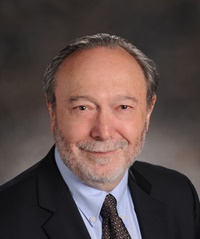
Stephen Porges, PhD Related seminars and products
Kinsey Institute, Indiana University and Department of Psychiatry at the University of North Carolina- Chapel Hill
Stephen W. Porges, PhD, is Distinguished University Scientist at Indiana University, where he is the founding director of the Traumatic Stress Research Consortium within the Kinsey Institute. He holds the position of Professor of Psychiatry at the University of North Carolina and Professor Emeritus at the University of Illinois at Chicago and the University of Maryland.
Dr. Porges served as president of both the Society for Psychophysiological Research and the Federation of Associations in Behavioral & Brain Sciences and is a former recipient of a National Institute of Mental Health Research Scientist Development Award. He has published more than 300 peer reviewed scientific papers across several disciplines including, anesthesiology, biomedical engineering, critical care medicine, ergonomics, exercise physiology, gerontology, neurology, neuroscience, obstetrics, pediatrics, psychiatry, psychology, psychometrics, space medicine, and substance abuse.
In 1994 Dr. Porges proposed the Polyvagal Theory, a theory that links the evolution of the mammalian autonomic nervous system to social behavior and emphasizes the importance of physiological state in the expression of behavioral problems and psychiatric disorders. The theory is leading to innovative treatments based on insights into the mechanisms mediating symptoms observed in several behavioral, psychiatric, and physical disorders.
He is the author of The Polyvagal Theory: Neurophysiological foundations of Emotions, Attachment, Communication, and Self-regulation (Norton, 2011), The Pocket Guide to the Polyvagal Theory: The Transformative Power of Feeling Safe (Norton, 2017) and co-editor of Clinical Applications of the Polyvagal Theory: The Emergence of Polyvagal-Informed Therapies (Norton, 2018).
Dr. Porges is also the creator of a music-based intervention, the Safe and Sound Protocol™, which currently is used by more than 1000 therapists to improve spontaneous social engagement, to reduce hearing sensitivities, and to improve language processing, state regulation, and spontaneous social engagement.
Content Disclosure:
This presentation will focus exclusively on The Polyvagal Theory on Supporting Children on the Autism Spectrum and will not include information about other similar or related theories.
Speaker Disclosure:
Financial: Stephen Porges is a Distinguished University Scientist at Indiana University; and a professor at the University of North Carolina. Dr. Porges has intellectual property rights, and receives royalties from Integrated Listening Systems (now Unyte). In addition, he holds patent rights licensed to NeuralSolution for the technology embedded in PhysioCam and in technologies embedded in products marketed by Unyte. He is an author for W. W. Norton and receives royalties. Dr. Porges receives a speaking honorarium from PESI, Inc.
Non-financial: Stephen Porges has no relevant non-financial relationship to disclose.
Additional Info
Access for Self-Study (Non-Interactive)Access never expires for this product.
For a more detailed outline that includes times or durations of time, if needed, please contact cepesi@pesi.com.
Objectives
- Apply the lens of the Polyvagal theory in appreciating the adaptive nature of behaviors in children diagnosed with Autistic Spectrum Disorders.
- Differentiate between viewing and manipulating surface behaviors and addressing the upstream causes of behaviors across diagnostic categories of the DSM.
- Determine how the process of neuroception is a guiding principle for treatment planning and treatment techniques.
Outline
- Understanding Behaviors as Adaptations of the Autonomic Nervous System: A Paradigm Shift
- Problem with targeting surface behaviors; Know the problem in order to shift the strategies: Case study
- The Neuroscience of Safety
- How the PVT helps us “look inside” the nervous system
- The guiding principle of neuroception and how it can help clinicians
- Individual Differences and Tailoring our Support for Individuals with Autism and their Families
- Looking under the skin to understand that autonomic state influences reactivity and sociality.
- Identifying strategies to retune autonomic state and shift hypersensitivity to social receptivity.
- Difference between passive and active pathway interventions
- Safe and Sound Protocol - a passive pathway intervention that harnesses the neuroception of safety
- Safety is Treatment and Treatment is Safety: Practical Tips
- How the neuroscience of safety helps us plan treatment goals
- Examples and principles of neural exercises and how they apply the ‘vagal brake’ to calm and promote resilience.
- The Power of Play
- Play to exercise the neural pathways of safety with activation in a safe way
- Research documenting how acoustic cues of safety reduce hypersensitivities.
Target Audience
- Addiction Professionals
- Case Managers
- Dieticians
- Licensed Clinical/Mental Health Counselors
- Marriage & Family Therapists
- Nurses
- Nursing Home/Assisted Living Administrators
- Occupational Therapists
- Occupational Therapy Assistants
- Physical Therapists
- Physical Therapist Assistants
- Psychologists
- School Administrators
- Social Workers
- Speech-Language Pathologists
- Teachers/School-Based Personnel
Reviews
Satisfaction Guarantee
Your satisfaction is our goal and our guarantee. Concerns should be addressed to: PO Box 1000, Eau Claire, WI 54702-1000 or call 1-800-844-8260.
ADA Needs
We would be happy to accommodate your ADA needs; please call our Customer Service Department for more information at 1-800-844-8260.
Please wait ...