

This program is no longer active, however there are other versions of this program in which you may be interested.
Suicide & Self-Harm: Stopping the Pain, 11/3/2022 12:00:00 AM EDT, Digital Seminar More info »
Suicide & Self-Harm: Stopping the Pain, 11/3/2022 12:00:00 AM EDT, DVD More info »
Suicide & Self-Harm: Stopping the Pain, 11/3/2022 12:00:00 AM EDT, Digital Seminar More info »
Suicide & Self-Harm: Stopping the Pain, 11/3/2022 12:00:00 AM EDT, DVD More info »
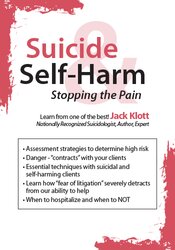
Digital Seminar
Purchase Additional Participant CE »
Suicide & Self-Harm: Stopping the Pain
- Average Rating:
- 99
- Faculty:
- Jack Klott, MSSA, LCSW, CSWW, Suicidologist
- Duration:
- 5 Hours 59 Minutes
- Format:
- Audio and Video
- Copyright:
-
Jun 22, 2020
- Product Code:
- POS011110
- Media Type:
- Digital Seminar - Also available: Digital Seminar | DVD
Description
Your client just revealed that she’s having suicidal thoughts...what do you do?
Does she have a gun? Has she written letters? Picked a location? Have hope something will change and doesn’t want to hurt family and friends?
Asking your client, “where do you hurt?” often reveals the focus of the suicidal intent or the purpose of self-harm behaviors. As a clinician, it’s important to remember that even though you view suicide and self-harm behaviors as dysfunctional and maladaptive, your client views them as purpose-driven means of eliminating or managing unbearable levels of pain. For your client, these behaviors are beneficial, attractive, and helpful.
Even the most seasoned therapists struggle to develop an empathic view of their client’s devastating methods of managing emotional pain. Learning how to help clients discover the sources of their pain and providing them with healthy options for solving and managing these struggles in their lives is the key to hope.
Through case studies observed in his 45 years as a counselor and suicidologist, Jack Klott brings to life the ideas, theories, and concepts you need to help your clients:
- Identify the seven goals of self-harm
- Implement a risk assessment strategy to determine who presents the highest risk for suicide and self-harm
- Recognize the profound danger of engaging in “contracts” with your clients
- Discuss the four essential elements of therapy with suicidal and self-harming clients
- Understand how “fear of litigation” can severely detract from your ability to help the suicidal population
Join Jack in this one-of-a-kind recording and learn how to help your clients confront the darkness of suicide and self-harm behaviors.
Credit
Handouts
| File type | File name | Number of pages | |
|---|---|---|---|
| Manual - Suicide & Self-Harm (0.96 MB) | 27 Pages | Available after Purchase | |
| Text Document | Illinois Educators Self-study Instructions (28.5 KB) | Available after Purchase | |
| Illinois Educators Evaluation Form (1.2 MB) | Available after Purchase |
Faculty
Jack Klott, MSSA, LCSW, CSWW, Suicidologist Related seminars and products
Jack Klott, MSSA, LCSW, CSWW, Suicidologist, and national speaker has helped and educated tens of thousands in his 45 years of suicide and self-harm client work. Jack is a 35-year member of the American Association of Suicidology and was a founder of the Michigan Association of Suicidology (where he has been recognized for his contribution to suicide prevention in Michigan).
He authored the national best sellers The Suicide and Homicide Risk Assessment and Prevention Treatment Planner (Wiley, 2004), The Co-Occurring Disorders Treatment Planner (Wiley, 2006), and Suicide and Psychological Pain: Prevention That Works (PESI, 2012).
Jack is a popular and sought after seminar speaker on suicide prevention, motivational interviewing, co-occurring disorders and the DSM®. Attendees rave about his unique teaching gift of weaving expertise, passion and compassion into practical, understandable and usable information.
Speaker Disclosures:
Financial: Jack Klott maintains a private practice. He receives royalties as a published author. Jack Klott receives a speaking honorarium, product, and book royalties from PESI, Inc. He has no relevant financial relationships with ineligible organizations.
Non-financial: Jack Klott is a member of the American Association of Suicidology and the Michigan Association for Suicide Prevention.
Alternate Options
Additional Info
Access for Self-Study (Non-Interactive)Access never expires for this product.
Objectives
- Implement a risk assessment strategy that helps clinicians determine which clients present the highest risk for suicide and self-harm.
- Analyze the concept of suicide “contracts” and communicate their impacts on clients, clinicians, and clinical vigilance.
- Explain how intent differentiates self-mutilation from suicide attempts and accurately identify the one form of self-mutilation that is a warning sign for potential suicide completion.
- Implement techniques for effectively intervening in crisis situations and develop a strategy for determining when and how to hospitalize clients.
- Articulate the role of addictions in the suicidal and self-mutilating population and employ a multi-faceted therapeutic approach that ensures client safety and addresses treatment of the addiction.
- Determine the purpose behind self-injuring behavior and communicate how alternative coping strategies can be introduced in therapy to help clients manage triggering situations without self-harm.
Outline
The Guiding Principles
Research on Suicide and Research Limitations
- Research on numbers/methods/treatment
- Limitations of a "psychological autopsy"
- No causality in research
The Neurobiological Basis of Suicide
Who Is At Risk?
- Mental Disorders
- Depression
- Anxiety
- Trauma
- Psychosis
- Addictions
- Personality Disorders
- Other DSM-5® Considerations
- Social Stress Factors
- Adults Factors
- Adolescent Factors
- Childhood Factors
- Psychological Vulnerabilities
- Performance Anxiety
- Emotional Constriction
- Defenseless Personality
- Adaptive Suicide Protectors
- Maladaptive Suicide Protectors
- Fueling Emotions to Suicide and Self-Harm
- All Behaviors are Purposeful!
- Relief from:
- Dissociative Conditions
- Self-Hate
- Emotional Constriction
- Psychosis
- Anxiety and/or Depression
- Loneliness, Isolation, Abandonment, Rejection
- Suicide Rehearsal – The Seventh Goal of NSSI
- The Ideator
- Suicide Threats for Secondary Gain
- The Attempter/Completer
- When to Hospitalize the Ideator
- Six Week Warning Signs for the Suicide Completer
- Six Day Warning Signs for the Suicide Completer
- Identify the Locus of Pain
- Empathic Regard
- Provided Alternatives
- The Role of Motivation
- Reasons For Living
- The Continuous Hope Providing Relationship
- Mindfulness
- Relationship Effectiveness
- Opening Up Your Emotional Door
- Emotional Regulation
- The Safety Plan
- The Crisis Plan
- Avoid “Contracts”
Target Audience
- Social Workers
- Psychologists
- Counselors
- Teachers
- School Administrators
- Marriage & Family Therapists
- Case Managers
- Addiction Counselors
- Therapists
- Nurses
- Other Mental Health Professionals
Objectives
- Implement a risk assessment strategy that helps clinicians determine which clients present the highest risk for suicide and self-harm.
- Analyze the concept of suicide “contracts” and communicate their impacts on clients, clinicians, and clinical vigilance.
- Explain how intent differentiates self-mutilation from suicide attempts and accurately identify the one form of self-mutilation that is a warning sign for potential suicide completion.
- Implement techniques for effectively intervening in crisis situations and develop a strategy for determining when and how to hospitalize clients.
- Articulate the role of addictions in the suicidal and self-mutilating population and employ a multi-faceted therapeutic approach that ensures client safety and addresses treatment of the addiction.
- Determine the purpose behind self-injuring behavior and communicate how alternative coping strategies can be introduced in therapy to help clients manage triggering situations without self-harm.
Reviews
| 5 |
|
| 4 |
|
| 3 |
|
| 2 |
|
| 1 |
|
Overall: 4.9
Total Reviews: 99
Satisfaction Guarantee
Your satisfaction is our goal and our guarantee. Concerns should be addressed to: PO Box 1000, Eau Claire, WI 54702-1000 or call 1-800-844-8260.
ADA Needs
We would be happy to accommodate your ADA needs; please call our Customer Service Department for more information at 1-800-844-8260.
Please wait ...