

Digital Version Available
Get immediate lifetime access to this content by purchasing the digital seminar/online course instead that you can access using a variety of devices, and one CE certificate is included with purchase! Click the “Digital Seminar” or "Online Course" link below to learn more!
DVD Purchasers please note: In order to view the content, you will be required to have a DVD player or a DVD drive on your computer. Your CE is a separate fee.
This program is no longer active, however there are other versions of this program in which you may be interested.
Rewire the Anxious Brain: Neuroscience-Informed Treatment of Anxiety, Panic and Worry, 1/12/2024 12:00:00 AM EST, Digital Seminar More info »
Rewire the Anxious Brain: Neuroscience-Informed Treatment of Anxiety, Panic and Worry, 1/12/2024 12:00:00 AM EST, Digital Seminar More info »
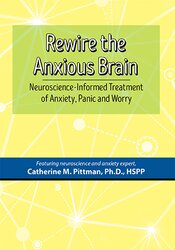
DVD
Purchase Additional Physical CE »
Rewire the Anxious Brain: Neuroscience-Informed Treatment of Anxiety, Panic and Worry
- Average Rating:
- 36
- Faculty:
- Catherine Pittman, PhD, HSPP
- Duration:
- 6 Hours 35 Minutes
- Copyright:
-
Jan 29, 2021
- Publisher:
- PESI Inc.
- Product Code:
- RNV051415
- Media Type:
- DVD - Also available: Digital Seminar
Description
Watch neuroscience and anxiety expert, Dr. Catherine Pittman, and learn her keys for successful anxiety treatment. Dr. Pittman integrates brain-based strategies for calming the anxious mind with client communication techniques that motivate change in your clients. Catherine’s approach promotes adherence to treatment and strengthens the therapeutic alliance – which is essential when working with anxious, worried, traumatized, or obsessive clients.
Dr. Pittman will give you proven tools and techniques to:
- Identify and treat the roots of anxiety in both the amygdala and the cortex
- Explain “the language of the amygdala” in an accessible, straight forward way
- Identify how the cortex contributes to anxiety, and empower clients with strategies to resist anxiety-igniting cognitions
Purchase today for this transformational workshop and put the power of neuroplasticity to work for you and your anxious clients!
Credit
Handouts
| File type | File name | Number of pages | |
|---|---|---|---|
| Manual - Rewire the Anxious Brain (2.89 MB) | 104 Pages | Available after Purchase | |
| Instructions for ASHA credit - Self-Study Only (64.4 KB) | Available after Purchase | ||
| CE Test – 051415 – Paper Option (256.6 KB) | Available after Purchase |
Faculty

Catherine Pittman, PhD, HSPP Related seminars and products
Saint Mary's College
Catherine Pittman, PhD, HSPP, is a professor of psychology at Saint Mary’s College, Notre Dame, Indiana. Dr. Pittman is the author of the popular books Rewire the Anxious Brain: How to Use the Neuroscience of Fear to End Anxiety, Panic, and Worry (New Harbinger Publications) and Taming Your Amygdala (PESI Publishing & Media). She has a background in cognitive behavioral therapy, neuropsychology, fear-conditioning research, and has treated anxiety-based disorders in clinical practice for over 25 years.
Dr. Pittman’s experience makes her uniquely qualified to provide a clear understanding of neuroscience and how that informs the selection and application of successful anxiety treatment strategies. She is recognized for her clear, accessible explanations of the role of the amygdala, and her approaches to lifestyle change and cognitive restructuring that help motivate clients to be more engaged and motivated in therapy. Dr. Pittman regularly presents workshops at national conferences and webinars on anxiety treatment and is an active member of the public education committee of the Anxiety and Depression Association of America.
Speaker Disclosures:
Financial: Dr. Catherine Pittman has employment relationships with Saint Mary's College and Renew Counseling. She receives royalties as a published author. Dr. Pittman receives a speaking honorarium, recording, and book royalties from Psychotherapy Networker and PESI, Inc. She has no relevant financial relationships with ineligible organizations.
Non-financial: Dr. Catherine Pittman is a member of the Anxiety and Depression Association of America.
Additional Info
Access for Self-Study (Non-Interactive)Access never expires for this product.
Objectives
- Analyze the underlying neurological processes that impact anxious symptoms for clients.
- Develop client engagement in treatment using personalized goals and attending to the therapeutic relationship.
- Evaluate the differences between amygdala-based and cortex-based anxiety symptoms and identify how these symptoms inform treatment interventions.
- Demonstrate strategies for calming and training the amygdala in order to alleviate symptoms of anxiety.
- Develop methods for teaching clients to retrain the cortex so that anxiety is resisted rather than exacerbated.
- Analyze how psychotropic medication impacts neuroplasticity in the brain; identify related treatment implications.
Outline
Use Neuroscience in the Treatment of AnxietyPositives:
- We know more about anxiety-based disorders than any other disorders
- Science gives explanations, evidence, authority, destigmatizes difficulties
- It can be difficult to explain, answer questions
- Clients may feel a lack of responsibility
- Oversimplification is inevitable
- Don’t neglect the therapeutic relationship!
- Address the challenges of anxious clients
- Remember that strategies are effortful
- Guide the process using client’s goals
- Maintain motivation
- Define Neuroplasticity in everyday language
- Therapy is about creating a new self
- ”Rewiring” as an accessible concept for change
- Re-consolidation: the modification of emotional memories
- Amygdala – bottom-up triggering of emotion, physicality of anxiety
- Cortex – top-down emotion generation based in cognition
- Explain the two pathways to clients
- How anxiety is initiated in each pathway and how pathways influence each other
- Use illustrations to create concrete understanding
- Fight/flight/freeze responses
- The “language of the amygdala”
- Anxiety and the cortex
- Help clients recognize the two pathways to anxiety
- Sleep and the amygdala
- The influence of exercise
- Breathing techniques to reduce activation
- Relaxation, meditation, and yoga to modify responses
- Exposure as opportunities for the amygdala to learn
- Combatting avoidance
- When anxiety indicates that the amygdala can learn new responses
- Push through anxiety to change the amygdala
- ”Survival of the busiest” principle – strengthen or weaken specific circuitry
- The healthy (adaptive) use of worry in the cortex
- ”You can’t erase: You must replace”
- Recognize and modify the impact of uncertainty
- Training correct uses of distraction
- Left hemisphere techniques – cognitive defusion, coping thoughts, fighting anticipation
- Right hemisphere techniques – imagery, music
- Mindfulness and anxiety resistances
- Medication’s effects in the rewiring process
- The myth of the chemical imbalance
- The danger of sedating the brain with benzodiazepines
- Promoting neuroplasticity with SSRIs, SNRIs
- The effectiveness of CBT and meds
- Anxiety is a component of many diagnoses (depression, substance abuse, etc.)
- Amygdala – and cortex-based techniques help in other disorders
- Targeting brain-based symptoms rather than disorders
- Worry, obsessions, rumination respond to similar cortex-based techniques
- Panic, phobic responses, and compulsions respond to amygdala-based techniques
Research, Risks and Limitations
- Empirical versus clinical and anecdotal evidence
- Clinical considerations for specific clients and settings
- Efficacy of particular interventions may vary
Target Audience
- Social Workers
- Psychologists
- Physicians
- Counselors
- Marriage and Family Therapists
- Case Managers
- Addiction Counselors
- Speech-Language Pathologists
- Therapists
- Nurses
- Occupational Therapists
- Other Mental Health Professionals
Reviews
| 5 |
|
| 4 |
|
| 3 |
|
| 2 |
|
| 1 |
|
Overall: 4.9
Total Reviews: 36
Satisfaction Guarantee
Your satisfaction is our goal and our guarantee. Concerns should be addressed to: PO Box 1000, Eau Claire, WI 54702-1000 or call 1-800-844-8260.
ADA Needs
We would be happy to accommodate your ADA needs; please call our Customer Service Department for more information at 1-800-844-8260.
Please wait ...