


Digital Seminar
Race, Culture, and Diversity in Therapy: A Step-by-Step Approach for Transforming Difficult Conversations to Create Change
- Average Rating:
- 110
- Faculty:
- Anatasia Kim, PhD
- Duration:
- 2 Hours
- Format:
- Audio and Video
- Copyright:
-
Jun 14, 2022
- Product Code:
- NOS096327
- Media Type:
- Digital Seminar

Description
This training aims to help therapists and supervisors develop a greater capacity for constructive conversations about race, culture, and diversity. It is designed to help build concrete skills that center relational connection while supporting social justice goals and values.
The training will address 3 main questions: (1) Why are conversations about race, culture, and diversity so difficult? (2) What gets in our way? (3) What can we do differently to have greater efficacy and impact?
The Kim Constructive Conversations Model (KCCM) will be introduced as a means to support difficult conversations about race, culture, and diversity in psychotherapy and supervision. The step-by-step approach is based on the principles of Cognitive Behavioral Therapy, Attachment Theory, and Buddhist Psychology. It is designed to build both greater awareness and skills to enhance practical implementation. Vignettes and case examples will be used to help illustrate the steps of the KCCM.
Finally, participants will be invited to: (1) identify personal areas for growth and (2) develop an individualized action plan to enhance practice and accountability.
Credit
Handouts
| File type | File name | Number of pages | |
|---|---|---|---|
| Manual - Race, Culture, and Diversity in Therapy (1.7 MB) | 29 Pages | Available after Purchase |
Faculty
Anatasia Kim, PhD Related seminars and products
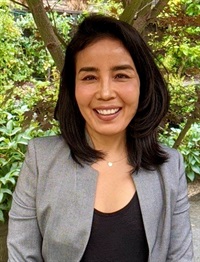
Anatasia Kim, PhD, is a clinician and an associate professor at The Wright Institute in Berkeley, California. She’s the lead author of It’s Time to Talk (and Listen): How to Have Constructive Conversations about Race, Class, Sexuality, Ability, and Gender in a Polarized World, and the upcoming Clinical Psychology Internship for Underrepresented Students: An Inclusive Approach Toward Higher Education.
Additional Info
Access for Self-Study (Non-Interactive)Access never expires for this product.
For a more detailed outline that includes times or durations of time, if needed, please contact cepesi@pesi.com.
Questions?
Visit our FAQ page at www.pesi.com/faq or contact us at www.pesi.com/info
Objectives
- Describe at least 2 reasons why conversations about race, culture, and diversity are so difficult.
- Identify at least 2 barriers to having constructive conversations about race, culture, and diversity with clients/supervisees.
- Describe the 8 steps of the Kim Constructive Conversations Model.
- Develop an individualized plan with at least 2 action steps for having constructive conversations about race, culture, and diversity with clients/supervisees.
Outline
Part I: Why race, culture, and diversity matter in therapy- An ethical and moral mandate
- Why these conversations are difficult
- Common missteps by therapists
- Overview and theoretical underpinnings of KCCM
- Preparation Phase: Steps 1-3
- Invitation Phase: Steps 4-5
- Conversation Phase: Steps 6-7
- Repetition Phase: Step 8
- Identifying areas for growth
- Developing a game plan
Target Audience
- Counselors
- Therapists
- Psychologists
- Addiction counselors
- Marriage and Family Therapists
- Social Workers
Reviews
| 5 |
|
| 4 |
|
| 3 |
|
| 2 |
|
| 1 |
|
Overall: 4.6
Total Reviews: 110
Satisfaction Guarantee
Your satisfaction is our goal and our guarantee. Concerns should be addressed to: PO Box 1000, Eau Claire, WI 54702-1000 or call 1-800-844-8260.
ADA Needs
We would be happy to accommodate your ADA needs; please call our Customer Service Department for more information at 1-800-844-8260.
Please wait ...