

This program is not active.
Digital Seminar
Purchase Additional Participant CE »
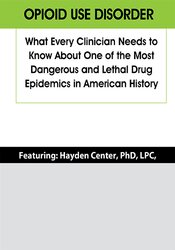
Opioid Use Disorder: What Every Clinician Needs to Know About One of the Most Dangerous and Lethal Drug Epidemics in American History
- Average Rating:
- Not yet rated
- Faculty:
- Hayden Center, PhD, LPC
- Duration:
- 3 Hours
- Format:
- Audio and Video
- Copyright:
-
Jun 17, 2022
- Product Code:
- POS058425
- Media Type:
- Digital Seminar
Description
A national emergency…the worst drug crises in U.S. history. The grim news surrounding opioid abuse continues to make the headlines.
But you know what lies behind the headlines. People. People whose lives have been devastated. Jail time and lost jobs. Shattered families. Early deaths and grieving families. People like you and I, prescribed a highly addictive substance to treat their chronic pain or after a minor medical procedure, who find themselves in a dangerous free fall that leaves their lives in ruin. People who walk through your door look to you for help.
Yet opioid disorders are substantially different from other addictions. Drug driven brain change and physical dependence, coupled with a substance that perilously slows breathing and heart rate have created a deadly epidemic of unprecedented proportions. And many individuals with opioid use disorders have at least one co-occurring mental health problem that must be addressed in the effort to achieve and sustain recovery.
A one-size fits all approach to addiction simply won’t suffice. Watch this workshop and learn more about:
- The neuroscience behind the unique risks of opioid abuse
- The signs – when pain management turns into addiction
- Tailored strategies to overcome the barriers to opioid use disorder treatment
- Psychotherapeutic approaches grounded in evidence-based modalities
- Screening tools and treatment strategies for co-occurring disorders
- Details on how Medication Assisted Treatment (MAT) can be combined with psychotherapy
Watch this critical one day seminar and get the tools you need to end the suffering and bring hope and healing to your clients!
Credit
Handouts
| File type | File name | Number of pages | |
|---|---|---|---|
| Manual - Opioid Use Disorder (2.2 MB) | 64 Pages | Available after Purchase | |
| Manual - Opioid Use Disorder - French (2.2 MB) | 64 Pages | Available after Purchase | |
| Manual - Opioid Use Disorder - Italian (2.2 MB) | 64 Pages | Available after Purchase |
Faculty
Hayden Center, PhD, LPC Related seminars and products
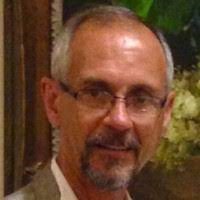
Hayden Center, PhD, LPC, has been treating individuals and families who suffer from substance abuse disorders, including opioid use disorder, for over 25 years in a private practice setting. Dr. Center most recently served as the evaluator for the Center for Substance Abuse Prevention’s (CSAP) Southeast Center for the Application of Prevention Technologies (SECAPT) and the Border Center for the Application of Prevention Technologies (BCAPT).
Dr. Center served as a consultant to the Alabama Governor’s Office of Drug Abuse Policy for 10 years and has worked with numerous state and local agencies in the state of Alabama.
He has provided over 200 trainings on the topics of science-based prevention, evaluation, risk and protective factors, co-occurring disorders, and other mental health and substance abuse issues. His current interests are providing training and technical assistance to increase the usage and effectiveness of evidence-based treatments and approaches.
In addition to his private practice, Dr. Center has taught in university settings for over 28 years. He teaches graduate-level courses in theories of psychotherapy, advanced objective testing, psychopharmacology, and undergraduate courses in psychology at Auburn University in Montgomery, Alabama. He earned his PhD in counselor education and Master of Science in psychology at Auburn University in Montgomery, Alabama.
Speaker Disclosures:
Financial: Dr. Hayden Center maintains a private practice. He receives a speaking honorarium and recording royalties from PESI, Inc. He has no relevant financial relationships with ineligible organizations.
Non-financial: Dr. Hayden Center is a member of the American Counseling Association.
Additional Info
Access for Self-Study (Non-Interactive)Access never expires for this product.
For a more detailed outline that includes times or durations of time, if needed, please contact cepesi@pesi.com. ** no”Access to Self Study” tab available.
Questions?
Visit our FAQ page at www.pesi.com/faq or contact us at www.pesi.com/info
Objectives
- Describe the addictive properties and physical impacts of opioids on the human body.
- Utilize screening tools to identify disorders that may co-occur with opioid use disorder.
- Examine the latest research regarding the efficacy of Medication Assisted Treatment approaches and psychosocial approaches with opioid abusing clients.
Outline
The Unique Nature of Opioid Addiction- Distinct risks of opioid abuse
- What neuroscience and biology reveal about opioid use
- Brain centers – the relationship between brain centers and pain
- The pleasure factor and the addicted brain
- Differences from other substance use disorders
- How chronic opioid use changes the brain
- Signs of opioid abuse and questions to ask
- CBT – recent studies
- Motivational Interviewing and commitment to change
- Dialectical Behavior Therapy – confidence and coping skills
- Acceptance and Commitment Therapy
- Family counseling
- How contingency management can be used with opioid use disorders
- Adjunct approaches
- Assessing and modifying treatment to ensure effectiveness
- Research limitations and risks of psychotherapeutic approaches
- Research and the latest findings
- Methadone, buprenorphine, naltrexone
- Benefits, risks and drawbacks of MAT
- Role of the behavioral health clinician in MAT
Target Audience
- Social Workers
- Counselors
- Psychologists
- Addiction Counselors
- Substance Abuse Counselors
- Therapists
- Case Managers
- Nurses
- Public Health Department Staff
- Marriage and Family Therapists
- Other Mental Health Professionals


Reviews
Satisfaction Guarantee
Your satisfaction is our goal and our guarantee. Concerns should be addressed to: PO Box 1000, Eau Claire, WI 54702-1000 or call 1-800-844-8260.
ADA Needs
We would be happy to accommodate your ADA needs; please call our Customer Service Department for more information at 1-800-844-8260.
Please wait ...