

Digital Version Available
Get immediate lifetime access to this content by purchasing the digital seminar/online course instead that you can access using a variety of devices, and one CE certificate is included with purchase! Click the “Digital Seminar” or "Online Course" link below to learn more!
DVD Purchasers please note: In order to view the content, you will be required to have a DVD player or a DVD drive on your computer. Your CE is a separate fee.
This program is not active.
DVD
Purchase Additional Physical CE »
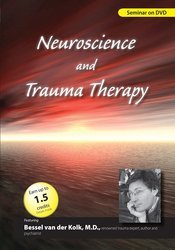
Neuroscience and Trauma Therapy with Bessel A. van der Kolk, M.D.
- Average Rating:
- Not yet rated
- Faculty:
- Bessel A. van der Kolk, MD
- Duration:
- 1 Hour 24 Minutes
- Copyright:
-
Nov 22, 2010
- Publisher:
- PESI Inc.
- Product Code:
- RNV042980
- Media Type:
- DVD
Description
The recent developments in neuroscience have given us new insights into how trauma impacts the development of the brain, and reorganized how the brain deals with input from its surroundings.
Join world trauma expert and leading authority Bessel A. van der Kolk, M.D. and hear how these findings support a range of new approaches to trauma treatment that until now have not been taught in graduate schools, such as:
- Affect regulation
- Memory processing
- Disturbances in sensori-motor integration
By understanding the impact of trauma on the brain it forces us to reconsider our therapeutic paradigms. Dr. van der Kolk will examine multiple areas in this high-impact 90-minute event.
Credit
Handouts
| File type | File name | Number of pages | |
|---|---|---|---|
| Manual - Neuroscience and Trauma Therapy with Bessel A. van der Kolk, M.D. (8.51 MB) | 16 Pages | Available after Purchase | |
| CE Test – 042980 – Paper Option (174.6 KB) | Available after Purchase |
Faculty

Bessel A. van der Kolk, MD Related seminars and products
Trauma Research Foundation
Bessel A. van der Kolk, MD, is a clinician, researcher and teacher in the area of post-traumatic stress. His work integrates developmental, neurobiological, psychodynamic and interpersonal aspects of the impact of trauma and its treatment.
Dr. van der Kolk and his various collaborators have published extensively on the impact of trauma on development, such as dissociative problems, borderline personality and self-mutilation, cognitive development, memory, and the psychobiology of trauma. He has published over 150 peer-reviewed scientific articles on such diverse topics as neuroimaging, self-injury, memory, neurofeedback, Developmental Trauma, yoga, theater, and EMDR.
He is founder of the Trauma Center in Brookline, Massachusetts and President of the Trauma Research Foundation, which promotes clinical, scientific, and educational projects.
His 2014 #1 New York Times best seller, The Body Keeps the Score: Brain, Mind, and Body in the Treatment of Trauma, transforms our understanding of traumatic stress, revealing how it literally rearranges the brain’s wiring – specifically areas dedicated to pleasure, engagement, control, and trust. He shows how these areas can be reactivated through innovative treatments including neurofeedback, somatically based therapies, EMDR, psychodrama, play, yoga, and other therapies.
Dr. van der Kolk is the past president of the International Society for Traumatic Stress Studies, and professor of psychiatry at Boston University Medical School. He regularly teaches at conferences, universities, and hospitals around the world.
Speaker Disclosures:
Financial: Dr. Bessel van der Kolk is a professor at Boston University School of Medicine, the Director of the Trauma Center, and the National Complex Trauma Network. He receives royalties as a published author. Dr. van der Kolk receives a speaking honorarium, recording royalties, and book royalties from PESI, Inc. He has no relevant financial relationships with ineligible organizations.
Non-financial: Dr. Bessel van der Kolk has no relevant non-financial relationships with ineligible organizations.

Additional Info
Access for Self-Study (Non-Interactive)Access never expires for this product.
Target Audience
Counselors, Social Workers, Psychologists, Case Managers, Addiction Counselors, Therapists, Marriage & Family Therapists, Nurses, Other Mental Health ProfessionalsObjectives
- Summarize the recent developments in neuroscience as they relate to the treatment of trauma.
- Describe how children learn to regulate their arousal responses.
- List and describe techniques of physical mastery, affect regulation and memory processing.
Outline
Neuroscience & Brain Development
- Neuroscience research and the course of brain development
- How children learn to regulate their arousal systems
- How the brain has fundamental capacities to learn to regulate itself
- Trauma, abuse and neglect: The derailment of developmental processes and brain development
Traumatic Imprints
- Storing of traumatic imprints in the subcortical brain areas and how they are largely divorced from verbal recall
- The required central focus of somatic experiencing of trauma-related sensations and affects
- How deep imprints are the engines for continuing maladaptive behaviors
Treatment Interventions
- Fixation on the trauma
- Why learned helplessness requires interventions aimed at restoring active mastery and the capacity to attend to the here-and-now
- The role of body-oriented and neurologically-based therapies to resolve the traumatic past
- Discussion of the integration of various approaches during different stages of treatment
Reviews
Satisfaction Guarantee
Your satisfaction is our goal and our guarantee. Concerns should be addressed to: PO Box 1000, Eau Claire, WI 54702-1000 or call 1-800-844-8260.
ADA Needs
We would be happy to accommodate your ADA needs; please call our Customer Service Department for more information at 1-800-844-8260.
Please wait ...