

This program is no longer active, however there are other versions of this program in which you may be interested.
Extended Adolescence - When 25 Looks More Like 18: Clinical Strategies for Clients Struggling to Meet the Demands of Adulthood, 4/11/2025 12:00:00 AM EDT, Digital Seminar More info »
Extended Adolescence - When 25 Looks More Like 18: Clinical Strategies for Clients Struggling to Meet the Demands of Adulthood, 4/11/2025 12:00:00 AM EDT, Digital Seminar More info »
Digital Seminar
Purchase Additional Participant CE »
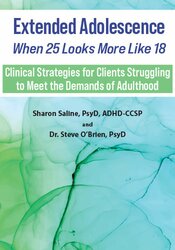
Extended Adolescence - When 25 Looks More Like 18: Clinical Strategies for Clients Struggling to Meet the Demands of Adulthood
- Average Rating:
- Not yet rated
- Faculty:
- Sharon Saline, PsyD, ADHD-CCSP | Steven O'Brien, PsyD
- Duration:
- 6 Hours 33 Minutes
- Format:
- Audio and Video
- Copyright:
-
Jun 09, 2021
- Product Code:
- POS058030
- Media Type:
- Digital Seminar - Also available: Digital Seminar
Description
The interplay of new technologies, socio-cultural shifts, and educational stressors have created obstacles for young people like never before.
Research suggests that while today’s youth enter adolescence much sooner, they actually reach adulthood much later...resulting in an “extended adolescence.” Our traditional therapeutic tools now fall short, as we endeavor to help clients meet the demands of adulthood.
Watch award-winning author and international speaker Sharon Saline, Psy.D., and national trainer and child/family consultant Steve O’Brien, Psy.D., for an enlightening experience designed to redefine and redesign your treatment approach to help young people forge a path to adulthood.
You will learn strategies to:
- Navigate ADHD, anxiety, autism and other obstacles to develop life skills
- Reprogram the dopamine dependent brain
- Cultivate openness and flexibility with Gen Z culture
- Collaborate with well-intended but over-involved parents
- Instill motivation to advance real-world engagement
- Promote “connected independence” in young adults
This timely and engaging training will shed new light on Generation Z youth and equip you with practical, contemporary tools for empowering these young people to shift gears and move toward a rewarding and meaningful adulthood.
Credit
Handouts
| File type | File name | Number of pages | |
|---|---|---|---|
| Manual - Extended Adolescence - When 25 Looks More Like 18 (9.1 MB) | 61 Pages | Available after Purchase | |
| Illinois Educators Self-Study Instructions (15.4 KB) | Available after Purchase | ||
| Illinois Educators Evaluation Form (1.2 MB) | Available after Purchase | ||
| Text Document | PA Educator Instructions (15.3 KB) | Available after Purchase | |
| Manual - Extended Adolescence - When 25 Looks More Like 18 - French (8.9 MB) | 61 Pages | Available after Purchase | |
| Manual for Parts I-III - Extended Adolescence - When 25 Looks More Like 18 - French (9.09 MB) | 61 Pages | Available after Purchase | |
| Manual - Extended Adolescence - When 25 Looks More Like 18 - Italian (8.9 MB) | 61 Pages | Available after Purchase | |
| Manual for Parts I-III - Extended Adolescence - When 25 Looks More Like 18 - Italian (9.09 MB) | 61 Pages | Available after Purchase | |
| Manual - Extended Adolescence - When 25 Looks More Like 18 - Spanish (9.1 MB) | 61 Pages | Available after Purchase | |
| Manual - Extended Adolescence - When 25 Looks More Like 18 - Spanish (9.1 MB) | 61 Pages | Available after Purchase | |
| Manual - Extended Adolescence - When 25 Looks More Like 18 - German (9.1 MB) | 61 Pages | Available after Purchase | |
| Manual - Extended Adolescence - When 25 Looks More Like 18 - German (9.1 MB) | 61 Pages | Available after Purchase |
Faculty
Sharon Saline, PsyD, ADHD-CCSP Related seminars and products
Dr. Sharon Saline, PLLC
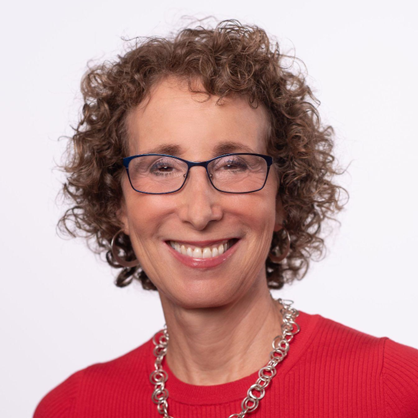
Sharon Saline, PsyD, ADHD-CCSP, clinical psychologist and author of the award-winning book, What Your ADHD Child Wishes You Knew: Working Together to Empower Kids for Success in School and Life and The ADHD Solution Deck, specializes in working with children, teens, and families living with ADHD, learning disabilities, twice exceptionality and mental health issues.
With decades of experience as a clinical psychologist, educator and consultant, she guides people towards a greater understanding about neurodivergence and to live with more productivity and connection. She lectures and facilitates workshops internationally on topics such as ADHD ad neurodivergence, executive functioning, the anxiety spectrum, motivation, perfectionism and working with different kinds of learners.
Dr. Saline is on the advisory panel, serves as a contributing editor at ADDitudemag.com and hosts their monthly Solve My Problem live webinar sessions. She is an instructor in the department of psychiatry, University of Massachusetts-Baystate, T.H. Chan School of Medicine, Springfield, MA. She also blogs for PsychologyToday.com, appears as a featured expert on MASS Appeal on WWLP-TV and is a part-time lecturer at the Smith School for Social Work. She has been featured in numerous online and print publications including The New York Times, MSN, The Washington Post, The Psychotherapy Networker, Smith College Studies in Social Work, Attention Magazine, Attitude Magazine and more.
Speaker Disclosures:
Financial: Dr. Sharon Saline maintains a private practice and has employment relationships with Smith College School for Social Work and Additudemag.com. . She receives royalties as a published author. She receives a speaking honorarium, recording, and book royalties from Psychotherapy Networker and PESI, Inc. She has no relevant financial relationships with ineligible organizations.
Non-financial: Dr. Sharon Saline is a member of the American Psychological Association, the Massachusetts Psychological Association, the Children and Adults with ADHD, and the Attention Deficit Disorder Association.
Steven O'Brien, PsyD Related seminars and products
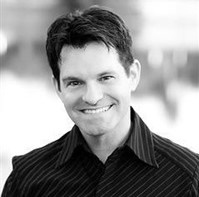
Steve O’Brien, PsyD, is a clinical psychologist with over 30 years of experience working with children, adolescents, young adults, and families in his Clearwater, Florida practice. He is a respected national consultant for mental health professionals seeking guidance on the treatment of anxiety and mood disorders, ADHD, Autism Spectrum Disorders, and adjustment challenges in divorced and blended families.
Since 2017, Dr. O’Brien has provided continuing education and professional training for mental health clinicians, focusing on evidence-based interventions for anxiety, depression, and neurodevelopmental disorders in youth. He is the author of The Essential Guide to Treating Childhood and Adolescent Anxiety, a clinical manual designed to enhance treatment outcomes.
His integrative-systems approach combines CBT, interpersonal techniques, and exposure/desensitization strategies, all tailored to the developmental needs of young clients and their families. Intensive parent consultation—emphasizing psychoeducation, communication skills, and behavior modification—is a cornerstone of his therapeutic work.
Dr. O’Brien has worked in numerous healthcare environments, including community mental health, psychiatric, inpatient/residential, substance abuse, and medical facilities. He also served as associate professor of child-adolescent studies at the Florida School of Professional Psychology. In addition to his clinical work, Dr. O’Brien is an app developer (Life@Home by Psychtouch.com) and a frequent guest on local news outlets for his expertise on childhood anxiety. Visit obrienpsychology.com for more information.
Speaker Disclosures:
Financial: Dr. Steven O'Brien maintains a private practice. He receives a speaking honorarium, recording and book royalties from Psychotherapy Networker and PESI, Inc. He has no relevant financial relationships with ineligible organizations.
Non-financial: Dr. Steven O’Brien is a member of the American Psychological Association and the Florida Psychological Association.
Alternate Options
|
Extended Adolescence - When 25 Looks More Like 18: Clinical Strategies for Clients Struggling to Meet the Demands of Adulthood
Copyright: 04/11/2025 - Product Code POS150308 |
Additional Info
Access for Self-Study (Non-Interactive)Access never expires for this product. For a more detailed outline that includes times or durations of time, if needed, please contact cepesi@pesi.com.
Objectives
- Evaluate relevant research on extended adolescence and emerging adulthood.
- Determine factors which promote normative vs complicated adolescent identity development.
- Evaluate the interplay of technological, societal, and educational stressors on the transition from adolescence to young adulthood.
- Distinguish how DSM-5™ disorders develop in adolescents hinder the “adulting” process.
- Choose therapeutic strategies for reducing symptom severity in young adults and for reducing systemic conflict.
- Design clinical interventions for common disorders of the Gen Z population.
- Employ therapeutic techniques for cultivating a growth mindset and resilience in young adults.
Outline
When 25 Looks More Like 18, Origins of Extended Adolescence- Psychosocial implications of a “Check-listed Childhood”
- Plugged-in but disconnected: “The Loneliest Generation”
- Short-term gratification for the dopamine dependent brain
- Gender, race, privilege and other “identity influencers”
- Interplay of technology, society and educational stressors
- “Virtual Reality IS Their Reality”
- Tips for rapport building with Generation Z
- Mindfully managing parental involvement
- Build working alliances without alignments
- Cultivate cooperation and bypass resistance
- Model openness and flexibility with Gen Z culture
- Distinguish between pathology and generational differences
- Precursors to other disorders – are you seeing these traits clearly
- Navigate more complex Identity exploration and confusion
- Differentiate oppositional behavior from healthy identity expression
Anxiety - Social, OCD, Panic
- Promote “real” interaction in a virtual world
- Facilitate flexibility by reducing device dependent behavior
- Neutralize perfectionistic worry to combat outcome certainty
- Reduce fears around healthy risk taking
- Dealing with fallout of social media and cyber harassment
- Reframe devaluing self-talk from negative online comparison
- Mood-management and preventing isolation
- Reduce desensitized views of self-harming thoughts/behaviors
- Social media boundaries to reduce impulsivity and negative consequences
- Device management to reduce distraction
- Self-structuring for time blindness
- “Appointment-Making” for better follow through
- Social coaching to reduce “passing as neurotypical” stress
- Brain-based, self-regulation strategies to manage overstimulation
- Foster flexible self-view around gender identity and sexuality
- Healthy routines to promote friendship, productivity and fun
- Teach tools for long-term resilience and self-advocacy
- Determine need for other professional services
- Advance healthy development in future generations
- Research findings and limitations
Target Audience
- Counselors
- Social Workers
- Psychologists
- School Psychologists
- Marriage and Family Therapists
- Educators
- Addiction Counselors
This workshop is intended for professionals working with clients 15-25.



Reviews
Satisfaction Guarantee
Your satisfaction is our goal and our guarantee. Concerns should be addressed to: PO Box 1000, Eau Claire, WI 54702-1000 or call 1-800-844-8260.
ADA Needs
We would be happy to accommodate your ADA needs; please call our Customer Service Department for more information at 1-800-844-8260.
Please wait ...