

Digital Seminar
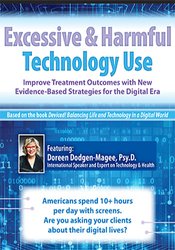
Excessive & Harmful Technology Use: Improve Treatment Outcomes with New Evidence-Based Strategies for the Digital Era
- Average Rating:
- Not yet rated
- Faculty:
- Doreen Dodgen-Magee, PsyD
- Duration:
- 6 Hours 13 Minutes
- Format:
- Audio and Video
- Copyright:
-
Aug 27, 2019
- Product Code:
- POS054990
- Media Type:
- Digital Seminar

Description
The modern digital world has presented a daunting therapeutic challenge. Technology is in your clients’ hands, and they’re using it daily to interact with the world.
The negative effects of technology overuse are impacting your clients like never before: lower self-esteem, social isolation, emotional dysregulation, the inability to focus or delay gratification, and sexual dysfunction. Even more alarming, growing evidence shows that specific forms of technology use are correlated with anxiety, depression, narcissism, violence and relational aggression.
The average American spends over ten hours per day with screens. If you aren’t asking your clients about their technology use, you’re missing out on a huge portion of their lives.
Watch and discover how to immediately transform your practice with:
- Step-by-step assessments for excessive and harmful technology use
- Strategies for breaking technology dependence habits
- Tools to combat the negative effects of technology overuse in your clients lives
- Practical, versatile ways to increase client engagement in “real-life”
Purchase today to help your clients reduce harmful technology use and greatly improve presenting issues of any diagnosis!
Credit
Handouts
| File type | File name | Number of pages | |
|---|---|---|---|
| Manual - Excessive & Harmful Technology Use (3.3 MB) | 47 Pages | Available after Purchase |
Additional Info
Access for Self-Study (Non-Interactive)Access never expires for this product.
Target Audience
- Counselors
- Social Workers
- Psychologists
- Psychiatrists
- Marriage & Family Therapists
- Addiction Counselors
- School Counselors
- School Psychologists
- School Social Workers
- Nurses
- Case Managers
- Other Mental Health Professionals
Objectives
- Identify and compare the neurological, interpersonal, and intrapersonal costs and benefits of technology use in clients.
- Perform a clinical assessment of technology use and dependence at intake to inform the clinician’s choice of treatment interventions.
- Create a technology use and assessment plan to monitor and reduce technology overuse symptoms, as well as improve client neurological, interpersonal, and intrapersonal level of functioning.
- Integrate self-soothing techniques and mindfulness meditation as an approach to managing symptoms and improving clients’ emotional regulation.
- Assess the negative effects of client technology engagement with violent, sexualized, monetized, and political content and provide alternative activities to improve treatment outcomes.
- Modify technology use and assessment plans for use with special clinical populations such as children, LGBTQ clients and clients with anxiety or depression.
Outline
Neurological, Interpersonal & Intrapersonal Impacts of the Digital Age- Get Educated! Know the platforms
- The ability to regulate, delay & focus
- Shame & self-esteem
- Emotional connections to objects
- Why boredom tolerance is a good thing
- Social & communication skills
- Case Study: Brett; considering foregoing college for a career as a professional gamer
Assessment of Technology Engagement & Effects
- Address your own technology bias
- 5 must-ask intake questions
- ABCDT assessment model
- Recognize addictive technology engagement
- Stimulation vs. meaningful self-soothing
- Clarify how clients communicate
- Take-home assessment forms & tools
- Ongoing assessment considerations
- Case Study: Family consultation with parents concerned about kids’ technology use
- Create technology use plans
- How to set healthy use norms
- Address resistance to digital moderation
- Teach digital safety
- Strategies to break technology addiction
- Counteract negative impacts of over-use
- In-session exercises to develop ability to focus
- Establish screen-free zones
- Develop critical thinking skills
- Digital alternatives to highly violent, sexualized or monetized content
- Case Study: Betsey; 20 hours of screen time per day
- Mindfulness meditation
- Create opportunities for boredom
- Boredom tolerance exercises
- Self-soothing techniques
- Develop screen-free coping skills
- Case Study: Jackie; required by work and vocation to be available 24/7
- Develop & maintain interpersonal skills
- Client self-examination of social network use
- Interventions for relational aggression
- In-session exercises for communication skills
- Strategies for social practice
- Case Study: Joseph; online dating; spends free time gaming
- Match digital platforms to learning type
- Constructive embodied engagement strategies
- Strategy modification for digital preferences
- Practical kinesthetic offerings
- Non-shaming conversations about tech use
- Case Study: KC; tapering off video game use
- Anxiety
- Depression
- Narcissism
- Children
- Adolescents
- Adults
- LGBTQ
- Case Consideration: How to choose the best technologies for special populations
Reviews
Satisfaction Guarantee
Your satisfaction is our goal and our guarantee. Concerns should be addressed to: PO Box 1000, Eau Claire, WI 54702-1000 or call 1-800-844-8260.
ADA Needs
We would be happy to accommodate your ADA needs; please call our Customer Service Department for more information at 1-800-844-8260.
Please wait ...