

Digital Seminar
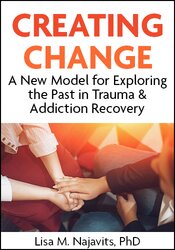
Creating Change: A New Model for Exploring the Past in Trauma & Addiction Recovery
- Average Rating:
- Not yet rated
- Faculty:
- Lisa Najavits, PhD
- Duration:
- 1 Hour 35 Minutes
- Copyright:
-
Aug 10, 2024
- Product Code:
- POS059991
- Media Type:
- Digital Seminar

Description
The transformation of the "Creating Change" model involves a comprehensive approach to trauma and addiction recovery. The model emphasizes 23 session topics covering:
- Origins of trauma and addiction
- Processing grief and regrets
- Reshaping life narratives
- Fostering resilience
- Exploration of trauma's impact on relationships
- Breaking the silence surrounding trauma experiences
- And more!
Don't miss this opportunity to revolutionize your approach to trauma and addiction recovery and help clients rewrite their life story with newfound resilience. Register now!
Credit
Handouts
| File type | File name | Number of pages | |
|---|---|---|---|
| Manual - Creating Change (3.3 MB) | 43 Pages | Available after Purchase |
Faculty
Lisa Najavits, PhD Related seminars and products
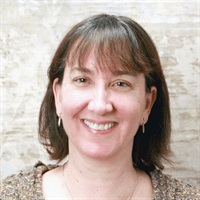
Lisa M. Najavits, PhD, is Adjunct Professor, University of Massachusetts Chan Medical School (Worcester, MA) and Director, Treatment Innovations. She was on the faculty of Harvard Medical School (McLean Hospital) for 25 years and Boston University School of Medicine (VA Boston) for 12 years. She specializes in the development of new counseling models for trauma and addiction, clinical trials research, and community-based care. She is author of over 200 professional publications, as well as the books Seeking Safety: A Treatment Manual for PTSD and Substance Abuse; Finding Your Best Self: Recovery from Addiction, Trauma, or Both; A Woman’s Addiction Workbook; and the upcoming Creating Change: A Past-Focused Treatment for Trauma and Addiction.
She served as president of the Society of Addiction Psychology of the American Psychological Association; and has consulted widely on public health efforts in trauma and addiction both nationally and internationally, including to the National Institutes of Health, the Surgeon General, the United Nations, and the Substance Abuse Mental Health Services Administration. She is on various advisory boards and has received awards including the Betty Ford Award of the Addiction Medical Education and Research Association, the Young Professional Award of the International Society for Traumatic Stress Studies; the Early Career Contribution Award of the Society for Psychotherapy Research; the Emerging Leadership Award of the American Psychological Association Committee on Women; and the Barnard College (Columbia University) Distinguished Alumna award.
She is a licensed psychologist in Massachusetts and conducts a psychotherapy practice. She received her PhD in clinical psychology from Vanderbilt University and bachelor’s degree in history with honors from Barnard College (Columbia University).
Speaker Disclosures:
Financial: Dr. Lisa Najavits maintains a private practice and has employment relationships with the Boston University School of Medicine and the University of Massachusetts Medical School. She is the founder of and speaker for Treatment Innovations. Dr. Najavits receives a speaking honorarium and recording royalties from PESI, Inc. She has no relevant financial relationships with ineligible organizations.
Nonfinancial: Dr. Lisa Najavits serves on the advisory board for Center for Gambling Research at the University of Georgia and Institute on Trauma and Trauma-Informed Care at the State University of New York.
Additional Info
Access for Self-Study (Non-Interactive)Access never expires for this product.
For a more detailed outline that includes times or durations of time, if needed, please contact cepesi@pesi.com.
Questions?
Visit our FAQ page at www.pesi.com/faq or contact us at www.pesi.com/info
Objectives
- Examine the use of past- versus present-focused counseling.
- Identify key features of the Creating Change model.
- Distinguish how Creating Change differs from classic trauma models.
- Determine how to adapt the Creating Change model based on client needs.
Outline
Why Use the Creating Change Model
- How Creating Change differs from existing models
- Client engagement is key (inspiration, flexibility, empowerment)
- Beyond “telling one’s story”
- For clients who are often excluded from classic trauma treatments
- For a broader range of providers
Key Features of Creating Change
- Integrates both positive and negative life experiences
- Offers many different ways to explore the past
- A lens on society and culture, not just the individual
- Draws on multiple theoretical orientations
- Low cost
Implementation: Diverse Settings, Clients, and Providers
- How to adapt the model
- Cultural awareness
- Attention to counselor processes
Risks and Limitations
- Strong safety parameters
- How to assess for readiness
- Limitations of the evidence
Target Audience
- Addiction Professionals
- Psychologists
- Licensed Clinical/Mental Health Counselors
- Case Managers
- Marriage & Family Therapists
- Social Workers
- Physicians
Reviews
Satisfaction Guarantee
Your satisfaction is our goal and our guarantee. Concerns should be addressed to: PO Box 1000, Eau Claire, WI 54702-1000 or call 1-800-844-8260.
ADA Needs
We would be happy to accommodate your ADA needs; please call our Customer Service Department for more information at 1-800-844-8260.
Please wait ...