

Digital Seminar
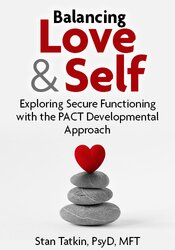
Balancing Love and Self
Exploring Secure Functioning with the PACT Developmental Approach
- Average Rating:
- 28
- Faculty:
- Stan Tatkin, PsyD, MFT
- Duration:
- 2 Hours 50 Minutes
- Format:
- Audio and Video
- Copyright:
-
Mar 24, 2024
- Product Code:
- NOS096387
- Media Type:
- Digital Seminar

Description
Sometimes one person’s needs in a relationship conflict with what the partnership requires. How do you balance both? Romantic partnerships based in secure functioning—where partners make their connection a priority while also caring for themselves—must achieve this balance. In this workshop, you’ll learn the fundamentals of PACT, a developmental approach to couples therapy that combines neuroscience, arousal regulation, and attachment theory. We’ll explore:
- Live demonstrations of “containers,” a unique organization method for assessing, intervening, and measuring a couple’s progress
- Assess and treat developmental roadblocks that partners bring into adult relationships
- How to create a secure-functioning relational system, one that emphasizes shared power and authority as well as fairness, justice, and mutual sensitivity
Credit
Handouts
| File type | File name | Number of pages | |
|---|---|---|---|
| Manual - Balancing Love & Self (1.8 MB) | 40 Pages | Available after Purchase | |
| Manual - Balancing Love & Self - French (1.8 MB) | 40 Pages | Available after Purchase | |
| Manual - Balancing Love & Self - Italian (1.8 MB) | 40 Pages | Available after Purchase | |
| Manual - Balancing Love & Self - German (1.8 MB) | 40 Pages | Available after Purchase | |
| Manual - Balancing Love & Self - Spanish (1.8 MB) | 40 Pages | Available after Purchase |
Faculty

Stan Tatkin, PsyD, MFT Related seminars and products
Stan Tatkin, PsyD, MFT, is a clinician, researcher, teacher, and developer of a Psychobiological Approach to Couple Therapy (PACT). He teaches and supervises family medicine residents at Kaiser Permanente, Woodland Hills, CA, and is an assistant clinical professor at the UCLA David Geffen School of Medicine, Department of Family Medicine.
Speaker Disclosures:
Financial: Stan Tatkin has employment relationships Santa Barbara Graduate Institute, University of California at Los Angeles, and Kaiser Permanente. He receives compensation as a national speaker and royalties as a published author. He has no relevant financial relationships with ineligible organizations.
Non-financial: Stan Tatkin is an author with Psychotherapy Networker.
Additional Info
Access for Self-Study (Non-Interactive)Access never expires for this product.
For a more detailed outline that includes times or durations of time, if needed, please contact cepesi@pesi.com
Questions?
Visit our FAQ page at www.pesi.com/faq or contact us at www.pesi.com/info
Objectives
- List at least five characteristics of a secure-functioning relationship.
- Name and describe the brain’s error potentials and why they matter.
- Assess threat perception in partners and be able to apply techniques for reducing or eliminating threat.
- Define and implement containers in couple therapy.
Outline
- The fundamentals of the PACT developmental approach to working with couples
- What is secure functioning and how does it relate to couples therapy
- An overview of the nature of human primates
- The difference between secure attachment and secure functioning.
- Defining and working within the two-person psychological system
- Helping couples co-create their relationship architecture, culture, purpose, and vision.
- Assessing developmental roadblocks to secure functioning
- Human brain error potentials and why they contribute to threat perception.
- The critical functions of containers when working with couples
- The core characteristics of a secure-functioning relational system
- Limitations of the research and potential risks.
Target Audience
- Psychologists
- Physicians
- Nurses
- Counselors
- Marriage and Family Therapists
- Addiction Counselors
- Social Workers



Reviews
| 5 |
|
| 4 |
|
| 3 |
|
| 2 |
|
| 1 |
|
Overall: 4.8
Total Reviews: 28
Satisfaction Guarantee
Your satisfaction is our goal and our guarantee. Concerns should be addressed to: PO Box 1000, Eau Claire, WI 54702-1000 or call 1-800-844-8260.
ADA Needs
We would be happy to accommodate your ADA needs; please call our Customer Service Department for more information at 1-800-844-8260.
Please wait ...