

Digital Version Available
Get immediate lifetime access to this content by purchasing the digital seminar/online course instead that you can access using a variety of devices, and one CE certificate is included with purchase! Click the “Digital Seminar” or "Online Course" link below to learn more!
DVD Purchasers please note: In order to view the content, you will be required to have a DVD player or a DVD drive on your computer. Your CE is a separate fee.
DVD
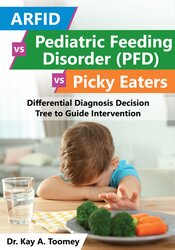
ARFID vs Pediatric Feeding Disorder (PFD) vs Picky Eaters: Differential Diagnosis Decision Tree to Guide Intervention
- Average Rating:
- Not yet rated
- Faculty:
- Kay A. Toomey, PhD
- Duration:
- 2 Hours 15 Minutes
- Copyright:
-
May 15, 2020
- Publisher:
- PESI Inc.
- Product Code:
- RNV064110
- Media Type:
- DVD

Description
With the increased use of the ARFID diagnosis, the field of Feeding Disorders has seen children being incorrectly diagnosed and treated as if they have an Eating Disorder. Not only has this created situations in which some children did not get the help they needed early enough, in some cases the inaccurate intervention has actually made the child’s feeding problem worse or even resulted in trauma to the child.
It is imperative that physicians, mental health providers and rehabilitation therapists clearly understand how to identify children in need of intervention, as well as being skilled in differentially diagnosing children with feeding, eating and growth difficulties.
A Differential Diagnosis Decision Tree will be a critical tool for Clinicians to use in delineating which children are picky eaters versus those with a Pediatric Feeding Disorder versus children with ARFID.
With an accurate differential diagnosis, Clinicians can then appropriately guide children and their families into the most helpful intervention programs for the child.
Credit
Handouts
| File type | File name | Number of pages | |
|---|---|---|---|
| Manual - ARFID vs Pediatric Feeding Disorder (PFD) vs Picky Eaters (1.33 MB) | 82 Pages | Available after Purchase | |
| Text Document | Illinois Educators Self-study Instructions (0.02 MB) | Available after Purchase | |
| Illinois Educators Evaluation Form (1.17 MB) | Available after Purchase | ||
| CE Test – 064110 – Paper Option (251.3 KB) | Available after Purchase |
Faculty
Kay A. Toomey, PhD Related seminars and products
Toomey & Associates, Inc.
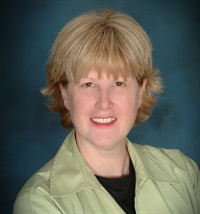
Dr. Kay A. Toomey is a pediatric psychologist who has worked with picky eaters and problem feeders for over 35 years. She has developed the SOS Approach to Feeding as a family-centered program for assessing and treating children with feeding problems. Dr. Toomey helped to form The Children’s Hospital – Denver’s Pediatric Oral Feeding Clinic, as well as the Rose Medical Center’s Pediatric Feeding Center.
Speaker Disclosures:
Financial: Kay Toomey is the President of Toomey & Associates and a researcher with the Sensory Processing Disorders Foundation. She receives a speaking honorarium, recording, and book royalties from PESI, Inc. She has no relevant financial relationships with ineligible organizations.
Non-financial: Kay Toomey has a professional relationship with Feeding Matters and The Feeding Trust.
Additional Info
Access for Self-Study (Non-Interactive)Access never expires for this product.
Objectives
1. Determine the characteristics of a “picky eater” as different from either PFD or ARFID.
2. Evaluate the validity of the criteria for ARFID.
3. Determine critical components of a Differential Diagnosis Decision Tree for Picky Eaters vs PFD vs ARFID.
4. Delineate which Case Study children meet the criteria for which diagnosis.
5. Discriminate appropriate treatment approach based on accurate differential diagnosis
Outline
Scope of the ProblemDefinitions and Prevalence
- Picky Eating
- Problem Feeders
- Why is Early Intervention important?
- Pediatric Feeding Disorder
- ARFID
- Problems with the ARFID diagnosis
- Prevalence
Treatment Approaches
- Educational
- Clinical
Recommendations for Intervention
Target Audience
- Psychologists working with Feeding Disorders, Eating Disorders and/or AFRID
- Other mental health providers working with Feeding Disorders, Eating Disorders and/or ARFID (e.g. social workers, counselors)
- Pediatric Occupational Therapists
- Pediatric Speech Pathologists
- Pediatric Feeding Specialists
- Physicians and/or Psychiatrists working with Feeding Disorders, Eating Disorders and/or ARFID
- Registered Dietitians working with Feeding Disorders, Eating Disorders and/or ARFID
- Day care providers
- Teachers/Educators
- Nurses
Reviews
Satisfaction Guarantee
Your satisfaction is our goal and our guarantee. Concerns should be addressed to: PO Box 1000, Eau Claire, WI 54702-1000 or call 1-800-844-8260.
ADA Needs
We would be happy to accommodate your ADA needs; please call our Customer Service Department for more information at 1-800-844-8260.
Please wait ...