

This program is no longer active, however there are other versions of this program in which you may be interested.
2-Day Grief Treatment Certification Course, 3/2/2023 12:00:00 AM EST, Digital Seminar More info »
2-Day Grief Treatment Certification Course, 3/2/2023 12:00:00 AM EST, Digital Seminar More info »
Digital Seminar
Purchase Additional Participant CE »
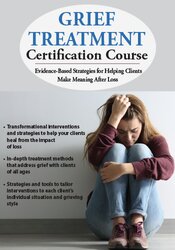
2-Day Grief Treatment Certification Course: Evidence-Based Strategies for Helping Clients Make Meaning After Loss
- Average Rating:
- 7
- Faculty:
- Joy R. Samuels, DMin, LPC-MHSP, NCC
- Duration:
- 12 Hours 36 Minutes
- Format:
- Audio and Video
- Copyright:
-
Feb 24, 2022
- Product Code:
- POS054640
- Media Type:
- Digital Seminar - Also available: Digital Seminar
Description
Your client’s world has been shattered following the loss of a loved one. Not only are they adjusting to these days and weeks without that person, but they are also struggling with changes to their sense of self. Who are they now as they navigate this new world? Your client is stuck in a place of paralyzing sorrow, and you’re unsure of what else to do to help.
You can transform the way you treat grieving clients with the tools and strategies you’ll learn in this 2-day Comprehensive Course!
Watch Rev. Dr. Joy Samuels, LPC-MHSP, NCC, as she leads you through the process of working with bereaved individuals and aiding them with making meaning after loss. You’ll learn evidence-based counseling strategies appropriate for the treatment of multiple types of losses, and you’ll acquire the skills you need to tailor clinical interventions to the uniqueness of each client’s grief experience.
Complete this advanced course, and you’ll learn how to guide your clients through making meaning after loss - drastically increasing their well-being and reducing symptoms of complicated grief. You’ll walk away with the tools you need to help your clients live fulfilling lives after loss.
Best of all, upon completion of this training, you’ll be eligible to become a Certified Grief Informed Professional (CGP) through Evergreen Certifications. Certification lets colleagues, employers, and clients know that you’ve invested the extra time and effort necessary to understand the complexities of grief counseling. Professional standards apply. Visit www.evergreencertifications.com/CGP for details.
Purchase today to revolutionize your work with grieving clients!
CERTIFICATION MADE SIMPLE!
- No hidden fees – PESI pays for your application fee (a $99 value)!
- Simply complete this seminar and the post-event evaluation included in this training, and your application to be a Certified Grief Informed Professional through Evergreen Certifications is complete.*
Attendees will receive documentation of CGP designation from Evergreen Certifications 4 to 6 weeks following the program. *Professional standards apply. Visit www.evergreencertifications.com/CGP for professional requirements.
Credit
Handouts
| File type | File name | Number of pages | |
|---|---|---|---|
| Manual - 2-Day Grief Treatment Certification Course (9.1 MB) | 119 Pages | Available after Purchase |

Alternate Options
Additional Info
Access for Self-Study (Non-Interactive)Access never expires for this product.
For a more detailed outline that includes times or durations of time, if needed, please contact cepesi@pesi.com
Questions?
Visit our FAQ page at www.pesi.com/faq or contact us at www.pesi.com/info
Objectives
- Differentiate relevant theories and models describing the physical and psychosocial effects of loss, grief, and mourning on the individual and family system and their clinical implications.
- Determine how to plan and implement appropriate assessments, interventions and strategies to help individuals and families cope with loss and grief to improve treatment outcomes.
- Perform a clinical assessment to inform the clinician’s choice of best treatment interventions for the reduction of symptoms of Prolonged Grief Disorder, disenfranchised grief, or Persistent Prolonged Grief Disorder.
- Differentiate potential loss events occurring throughout the lifespan, including non-death situations, to inform the clinician’s choice of treatment interventions.
- Analyze the ethnic, gender, and cultural factors that affect individual responses to loss-related situations as it relates to case conceptualization.
- Evaluate factors that influence normal and complicated reactions to dying and grief in clients.
- Determine one’s own cognitive, affective, and behavioral reactions to death, dying, and bereavement, as it relates to professional practice with clients experiencing grief and loss.
- Differentiate theories and models of individual, cultural, couple, family, and community resilience in relation to assessment and treatment planning.
- Analyze the efficacy of various treatment interventions for complicated grief to improve clinical outcomes.
- Determine the ethical and legal issues in end-of-life decisions, such as suffering, dying, and choice, and their clinical implications.
- Utilize clinical strategies to assist grieving clients in the move from flight or fight to social engagement in session.
- Utilize the co-regulating pathways of the social engagement system in session as an approach to managing symptoms of Prolonged Grief Disorder.
Outline
Types of Grief & Their Implications for Treatment
- Explain historical and current relevant theories and models describing the physical and psychosocial effect of loss, grief, and mourning on the individual and family system.
- Compare factors that influence normal and complicated reactions to dying and grief.
- Disenfranchised grief
- Persistent Prolonged Grief Disorder
- Traumatic Bereavement
- Prolonged Grief Disorder
- Common trajectories for grief
- Recognize Prolonged Grief Disorder
- Risk factors for Prolonged Grief Disorder
- Treatment Interventions
- Types of Loss & Their Impact on Grieving
- Parental loss
- Child loss
- Widowhood
- Non-death losses
Grief & the Family: Guide Families Through Healthy Grieving
- Differentiate potential loss events occurring throughout the lifespan, including non-death situations, and complicated bereavement.
- Identify theories and models of individual, couple, and family resilience.
- Family systems theory: Family influences on individual grief
- Variables that complicate family adaptation
- Strategies to guide family adaptation to loss
- Develop respect for different grieving styles
- The role of gender norms
- Developmental considerations & milestones related to loss reactions for:
- Children
- Adolescents
- Early adulthood
- Middle adulthood
- Later adulthood
Multicultural Considerations for Grief Treatment
- Analyze the ethnic, gender, and cultural factors that affect responses to loss-related situations.
- Increase awareness of one’s own beliefs, assumptions, and biases and how they may influence the establishment and maintenance of therapeutic relationships with culturally diverse clients.
- Cultural factors affecting expression of grief
- Impact on mourning practices
- Culture’s impact on death anxiety & meaning of life
- Determine where the identity emphasis lies
- Cultural values regarding emotional expression and disclosure
- The impact of society on grief
Assessment: Intake Considerations for Grieving Clients
- Articulate how to plan and implement appropriate assessments, interventions, and strategies.
- Perform a clinical assessment to inform the clinician’s choice of best treatment interventions for the reduction of symptoms.
- Current conceptualization models
- Factors impacting the grief experience
- Assess for depression and suicide ideation
- Differentiate between depression, grief & PTSD
- Persistent Prolonged Grief Disorder
- Take home assessment tools
Grief Treatment: Interventions & Strategies to Improve Clinical Outcomes
- Analyze the efficacy of various treatment interventions for complicated grief to improve clinical outcomes.
- Utilize clinical strategies to assist grieving clients in the move from fight/flight or freeze to social engagement in sessions.
- Utilize the co-regulating pathways of the social engagement system in session as an approach to managing symptoms of complicated grief.
- Assist clients with expressing their pain
- Integrate a new inner image of the deceased
- Client self-assessment strategies for coping
- Foster client relaxation skills
- Let the client lead: Starting point, story & stopping point
- Cultivate acceptance
- Elicit emotional availability in clients
- Give clients “permission” to not share stories
- Develop healthy grief rituals
- Target guilt due to stopping grief rituals
- Build a bridge between memories, current behaviors & underlying values
- Help clients accept the finality of the death
- Navigate the treatment of multiple losses
- “Family coat of arms” activity
Professional Issues: Ethical Considerations for Working with Grieving Clients, Their Families & the Terminally Ill
- Scrutinize the ethical and legal issues in end-of-life decisions, such as suffering, dying and choice, and their clinical implications.
- Examine one’s own cognitive, affective, behavioral, and valuational reaction to death and dying and bereavement as it relates to professional practice with client’s experiencing grief and loss.
- Ethical dilemmas that confront the terminally ill
- Ethical principles of end-of-life decisions
- The clinician’s role in addressing psychological suffering & needs of the terminally ill
- Impact of cause of death on social isolation
- Identify the core values and principles of professional ethical behavior
- Boundaries of professional competence
Target Audience
- Psychologists
- Psychiatrists
- Counselors
- Addiction Counselors
- Case Manager
- Social Workers
- Pastoral Counselors
- Chaplains/Clergy
- Funeral Directors
- Marriage & Family Therapists
- Mental Health Nurses
- Nursing Home Administrators
- Thanatologists
- Physicians
- Other Mental Health Professionals
Reviews
| 5 |
|
| 4 |
|
| 3 |
|
| 2 |
|
| 1 |
|
Overall: 4.9
Total Reviews: 7
Satisfaction Guarantee
Your satisfaction is our goal and our guarantee. Concerns should be addressed to: PO Box 1000, Eau Claire, WI 54702-1000 or call 1-800-844-8260.
ADA Needs
We would be happy to accommodate your ADA needs; please call our Customer Service Department for more information at 1-800-844-8260.
Please wait ...