

This program is no longer active, however there are other versions of this program in which you may be interested.
2-Day Hypnosis for Trauma & PTSD: A Hypnosis, Mind/Body & Neuroscience Approach to Effectively Treat Trauma and PTSD, 10/28/2021 12:00:00 AM EDT, Digital Seminar More info »
2-Day Hypnosis for Trauma & PTSD: A Hypnosis, Mind/Body & Neuroscience Approach to Effectively Treat Trauma and PTSD, 10/28/2021 12:00:00 AM EDT, DVD More info »
2-Day Hypnosis for Trauma & PTSD: A Hypnosis, Mind/Body & Neuroscience Approach to Effectively Treat Trauma and PTSD, 10/28/2021 12:00:00 AM EDT, Digital Seminar More info »
2-Day Hypnosis for Trauma & PTSD: A Hypnosis, Mind/Body & Neuroscience Approach to Effectively Treat Trauma and PTSD, 10/28/2021 12:00:00 AM EDT, DVD More info »
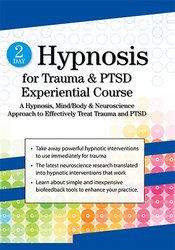
Digital Seminar
Purchase Additional Participant CE »
2 Day Hypnosis for Trauma & PTSD Experiential Course
- Average Rating:
- 17
- Faculty:
- Carol Kershaw, EdD | Bill Wade, MDiv, LPC, LMFT
- Duration:
- 12 Hours 01 Minutes
- Format:
- Audio and Video
- Copyright:
-
Jan 18, 2018
- Product Code:
- POS053195
- Media Type:
- Digital Seminar - Also available: Digital Seminar | DVD
Description
Your clients have endured stressful and traumatic experiences which often results in less ability maintain health and to fully provide self-comfort. This course is designed to help you understand more the neurological and psychological patterns that create PSTD symptoms. This course will focus on developing strategies to help traumatized clients heal by changing these patterns.
Hypnosis is a powerful tool that you can add to your clinical toolbox for treating trauma. When it’s used with the brain in mind, hypnosis provides effective interventions to help clients interrupt negative patterns, live more in joy with the ability to self-motivate, and accomplish life goals.
During this course, special emphasis will be given to understanding how trauma affects the brain and can lead to symptoms such as anxiety, depression, panic, insomnia, obsessive-compulsive behavior and difficulty handling anger. You will learn how to treat these symptoms with the use of hypnosis.
Watch hypnosis experts and trainers, Carol Kershaw and Bill Wade, as they demystify and simplify hypnosis so you can start using it with your traumatized clients immediately. They will break down the research that supports hypnosis for trauma and teach you how to implement it into your clinical work. You will learn through demonstration, case- examples, lecture, experiential exercises and hands-on experience.
This is a course you don’t want to miss!
Credit
Handouts
| File type | File name | Number of pages | |
|---|---|---|---|
| Manual 053195 (3.3 MB) | 65 Pages | Available after Purchase |
Faculty


Bill Wade, MDiv, LPC, LMFT Related seminars and products
Bill Wade, MDiv, LPC, LMFT, is a licensed professional counselor and marriage and family therapist, author and international trainer. Co-director of the Milton Erickson Institute of Houston he is also a co-author of Brain Change Therapy: Clinical Interventions for Self-Transformation and The Worry-Free Mind: Train Your Brain, Calm The Stress Spin Cycle, and Discover a Happier, More Productive You. Bill has taught extensively in the states on neuroscience and has also taught meditation and given Dharma lectures at various Buddhist temples.
Speaker Disclosures:
Financial: J. William Wade is a trainer with Tatra Training and the Milton Erickson Institute of Houston. He receives royalties as a published author. J. William Wade receives a speaking honorarium, recording royalties, and book royalties from PESI, Inc. He has no relevant financial relationships with ineligible organizations.
Non-financial: J. William Wade is a member of the American Association for Marriage and Family Therapy, the Association for Applied Psychophysiology and Biofeedback, the American Counseling Association, the American Society of Clinical Hypnosis, the Texas Association for Marriage and Family Therapy, the Houston Association for Marriage and Family Therapy, and the International Society of Hypnosis.
Alternate Options
|
2-Day Hypnosis for Trauma & PTSD: A Hypnosis, Mind/Body & Neuroscience Approach to Effectively Treat Trauma and PTSD
Copyright: 10/28/2021 - Product Code POS053195 |
Additional Info
Access for Self-Study (Non-Interactive)Access never expires for this product.
Outline
Neurophysiology of Trauma/PTSD- Impact on the nervous system
- Impact of trauma on the brain
- Impact of stress on the brain
- Vagal Nerve Activation-Stephen Porges
- Intense and prolonged trauma
- Developmental trauma
- Seizure activity with trauma
- Attachment styles
- Trauma and dissociation style attachment
- Attachment and relationships
- Body/Mind as frequency, light and innate healing abilities
- Discovery of filament structures in body carrying information
- Cellular biophoton release
- Limitations with research
- Symptoms of limbic over arousal: Anxiety, startle response, panic, obsessive-compulsive patterns, anger, insomnia
- Symptoms of limbic under arousal: Depression, negative thinking and altered perception of experiences
- Definition of hypnosis as resource activator
- Focused attention and suggestion
- Hypnotic language
- Conversational hypnosis
- Psychotherapy as hypnosis
- EEG hypnosis
- Simple Inductions
- Changing Mental States
- Strategies to Interrupt Rumination
- Strategies for Anxiety, Depression, Calming the Nervous System
- Experiential exercises to practice the skills learned
- Demonstration: EEG Hypnosis
- Retrieval and disruption
- How to move a memory from short term to long term
- State dependent memory and learning
- How optical system may play a role in symptom formation and removal
- Focus on “nothing” helps eliminates negative thought
- Heartmath HRV training
- Temperature training
- Breath training and meditation
- Galvanic skin response training
- Too much attention on feelings
- Too much emphases on the trauma story
Objectives
- Breakdown the basics of clinical hypnosis to incorporate into your practice.
- Analyze the research on hypnosis as it relates to the clinical treatment of trauma.
- Describe advances in mind/body research as it relates to trauma.
- Determine the efficacy of focused attention on alleviating symptoms of trauma and PTSD.
- Analyze the neurophysiology of trauma in relation to assessment and treatment planning.
- Integrate three hypnotic strategies to facilitate trauma- symptom resolution with clients.
- Demonstrate how deep hypnotic states can help calm a client’s anxiety, panic and reactivity.
- Describe how trauma symptoms may act as negative hypnotic trances and how that may affect therapeutic outcomes.
- Intervene on emotional instability with three hypnotic protocols to improve client level of functioning.
- Describe how you can alter client’s emotional states with hypnosis to help reduce trauma symptoms.
- Determine how the differences among secure, ambivalent, anxious and disorganized attachment categories can better inform clinical assessment of trauma.
- Modify attachment patterns with hypnosis to help move clients forward in clinical treatment.
Target Audience
Addiction Counselors, Case Managers, Counselors, Marriage & Family Therapists, Nurses, Psychologists, Social Workers, and other Mental Health ProfessionalsReviews
| 5 |
|
| 4 |
|
| 3 |
|
| 2 |
|
| 1 |
|
Overall: 4.9
Total Reviews: 17
Satisfaction Guarantee
Your satisfaction is our goal and our guarantee. Concerns should be addressed to: PO Box 1000, Eau Claire, WI 54702-1000 or call 1-800-844-8260.
ADA Needs
We would be happy to accommodate your ADA needs; please call our Customer Service Department for more information at 1-800-844-8260.
Please wait ...